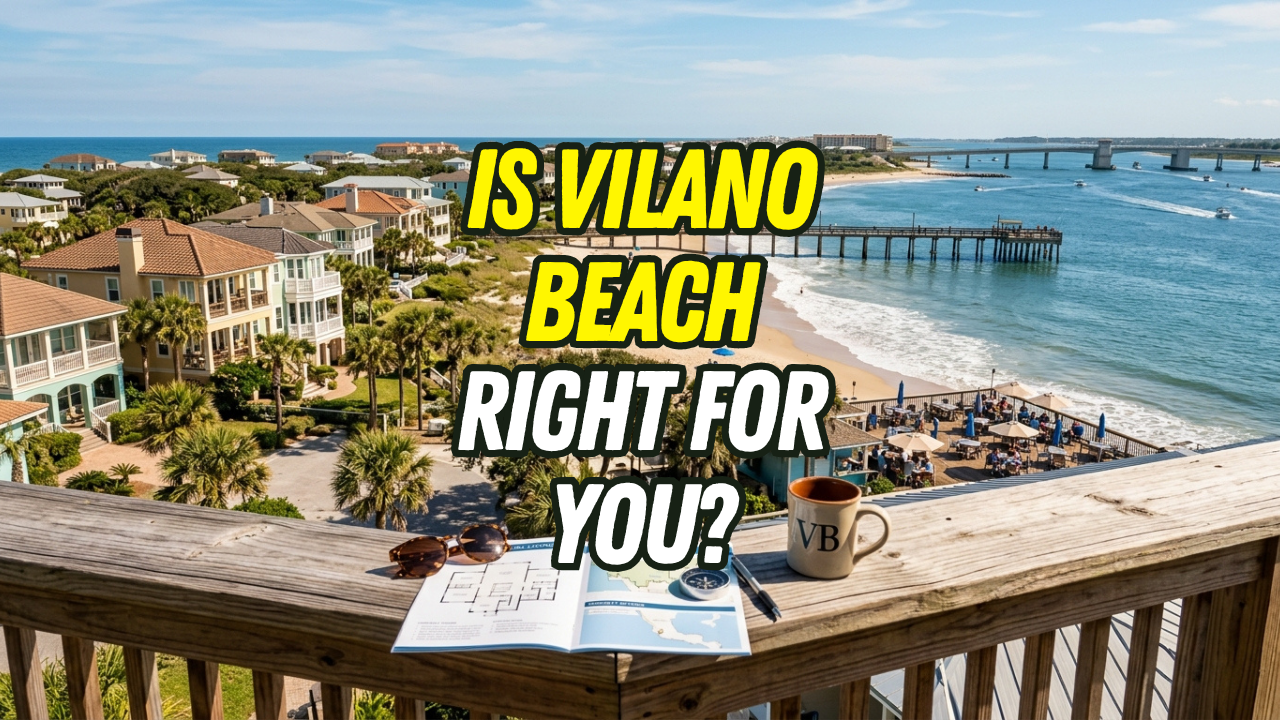
Vilano Beach is a small coastal community just north of Historic St. Augustine that combines Atlantic Ocean access, stronger surf, waterfront dining, a fishing pier, and a laid-back beach-town atmosphere. It can be a great place to visit if you want beach time without staying in the middle of St. Augustine Beach, and it can appeal to buyers who want coastal living close to downtown. If you're considering moving here, however, look beyond the ocean views and evaluate flood exposure, insurance, property condition, traffic, maintenance, and the exact location of the home.
What Should You Know About Vilano Beach Before You Visit or Move?
- Vilano is close to Historic St. Augustine. It sits just north of downtown on the north side of the Matanzas Inlet.
- The surf can be stronger. Vilano is known for heavier surf and stronger currents associated with its inlet location.
- It offers both ocean and river experiences. You can spend time on the Atlantic side and visit the pier and Intracoastal side of the community.
- Beach driving is limited. Designated vehicle access is available, but 4WD restrictions, fees, hours, tides, and sand conditions can apply.
- It feels different from St. Augustine Beach. Vilano has a smaller, somewhat retro beach-community identity rather than the longer commercial beach corridor found south of downtown.
- Buying near the water requires additional due diligence. Flood information, insurance, elevation, storm exposure, roof condition, and coastal maintenance should be investigated before purchasing.
Where Is Vilano Beach?
Vilano Beach is immediately north of St. Augustine's Historic District, across the waterways surrounding the St. Augustine Inlet. That location is one of its biggest advantages. You can spend the morning at the ocean, head toward Historic St. Augustine for lunch or an event, and return to the beach community without living directly inside the downtown tourist district. Vilano's geography also creates one of its defining characteristics: water is part of the experience in multiple directions. The Atlantic Ocean sits to the east, while the Intracoastal and Matanzas River system shape the western side. Near the southern end, Porpoise Point reaches toward the inlet and offers another perspective on the water. For someone visiting St. Augustine, that makes Vilano a useful alternative to simply spending every beach day on Anastasia Island. For someone relocating, the location can offer a balance between coastal living and access to downtown—but you should test your actual driving routes before deciding that the location works for you.
What Is Vilano Beach Like?
Vilano has a personality that is noticeably different from many Florida beach communities. The central area has retro and Art Deco influences, along with restaurants, accommodations, beach access, and a pier. The surrounding residential areas range from older coastal homes to renovated properties and newer construction. The result is not a perfectly uniform master-planned beach town. That is part of the appeal for many people. You may see significant differences in architecture, lot size, elevation, construction age, and property condition from one street to another. If you're visiting, that variety gives Vilano character. If you're buying, it means you need to evaluate the individual property rather than assuming that every Vilano Beach home offers the same ownership experience.
Vilano Beach Is Known for Surfing and Skimboarding
Vilano's location beside the inlet contributes to a steeper shoreline, heavier surf, and stronger currents than visitors may encounter at some other St. Augustine-area beaches. That has helped make it a recognized local spot for surfing and skimboarding when conditions cooperate. If surf sports are one of your priorities, Vilano deserves to be on your list. But those same conditions mean swimmers should pay attention to current surf, tides, rip-current information, weather, and lifeguard conditions. A beach being good for surfing does not automatically make it the best choice for every swimmer or every day.Local conditions change constantly, so check before entering the water rather than relying on general descriptions of the beach.
Where Do You Access Vilano Beach?
The primary beach access is around Anahma Drive on the Atlantic side.
Facilities in the main Vilano Beach area include:
- Off-beach parking
- Restrooms
- Showers
- Picnic facilities
- A pavilion
- Seasonal lifeguard coverage
Vilano Beachfront Park also provides an accessible beach walkover, parking, changing facilities, showers, a playscape, and a covered stage. Farther north, Surfside provides another beach-access option with more limited facilities. If you are visiting during a busy weekend or holiday, it is worth arriving with more than one access point in mind rather than assuming your first choice will have convenient parking.
Can You Drive on Vilano Beach?
Yes, but access is limited and regulated.
Vehicle access is offered in designated locations, including around Porpoise Point and Surfside, but four-wheel-drive requirements can apply. Beach access can also be restricted or closed depending on tides, sand conditions, weather, environmental protections, or other conditions.
Seasonal access fees apply during part of the year.
Driving hours also vary seasonally.
If driving onto the beach is important to your visit, verify the current St. Johns County rules and access status that day. Do not assume that because you drove onto the beach during a previous trip, the same ramp will necessarily be open under current conditions.
What Can You Do Besides Sit on the Beach?
Vilano offers more than an Atlantic shoreline.
Depending on your interests, a day in the area can include:
- Surfing
- Skimboarding
- Fishing
- Walking the beach
- Watching the sunrise
- Visiting the Vilano Beach Pier
- Boating or taking a water excursion
- Dining along the water
- Exploring Porpoise Point
- Traveling into Historic St. Augustine
One of Vilano's advantages is that you can experience both the Atlantic and the river side of the community. That also gives visitors options when they want a coastal day without spending every hour on the sand.
Restaurants and Everyday Convenience
Vilano has several dining options in and around the beach community, including waterfront restaurants and casual destinations. That means a visit does not necessarily require packing everything for the day and leaving only when you're finished. For residents, however, everyday convenience deserves a different evaluation.
When deciding whether to move to Vilano, drive from a potential home to the places you will use regularly:
- Grocery stores
- Pharmacy
- Healthcare providers
- Work
- Downtown St. Augustine
- Schools, if relevant
- Interstate access
- Your preferred beach access
A location that feels wonderfully removed during vacation may feel different when you are making those trips every week.
What Is It Like to Live in Vilano Beach?
Living in Vilano Beach is different from visiting for a weekend. As a resident, the attraction is less about having one perfect beach day and more about making the coast part of normal life. That might mean a walk along the Atlantic before work, fishing near the inlet, dinner overlooking the water, or a relatively quick trip into Historic St. Augustine. The Kim Devlin Team's Vilano Beach area guide describes the community as a coastal location combining a relaxed lifestyle with access to St. Augustine's cultural attractions. The team's broader local guides also distinguish Vilano and North Beach from the denser St. Augustine Beach experience. For a buyer, the best question is not simply “Do I like Vilano?” Ask which part of Vilano works for your routine and what type of property matches the way you want to live.
What Types of Homes Will You Find?
Vilano Beach does not offer one standardized housing product.
Depending on location and current inventory, buyers may encounter:
- Older Florida beach homes
- Renovated coastal houses
- Newer elevated construction
- Ocean-oriented properties
- Intracoastal or river-oriented properties
- Homes near the town center
- Properties on quieter residential streets
This variety makes property-level inspection particularly important. A remodeled kitchen does not tell you the condition of the roof, building envelope, windows, electrical system, plumbing, drainage, foundation, or storm-protection features. Two homes within the same general area can have substantially different insurance, maintenance, and flood considerations.
Flood Risk Should Be Part of the Buying Conversation
Vilano is a coastal community beside both the Atlantic and inland waterways. Flood and storm exposure therefore deserve serious attention when evaluating a property. That does not mean every Vilano property carries the same risk.
Risk can vary according to:
- Exact location
- Elevation
- FEMA flood designation
- Construction method
- Drainage
- Distance from water
- Storm-surge exposure
- Road access
FEMA's own post-Hurricane Irma assessment included Surfside Park in Vilano Beach when reviewing coastal storm performance, illustrating why coastal construction and flood characteristics need to be evaluated carefully in this area. If you're considering a home, check the exact address using current FEMA flood information and obtain property-specific insurance guidance before closing.
Insurance Can Change the Real Cost of a Vilano Home
Coastal property affordability should never be evaluated using the mortgage payment alone.
Before buying, calculate:
- Mortgage principal and interest
- Property taxes
- Homeowners insurance
- Flood insurance where applicable or desired
- HOA fees, if applicable
- Exterior maintenance
- Roof replacement reserves
- Salt-air and coastal maintenance
- Landscaping
- Dock, seawall, or waterfront maintenance where relevant
Get insurance quotes early. A property that appears to fit your purchase budget can produce a very different monthly ownership cost after insurance and coastal maintenance are included.
How Close Is Vilano Beach to Historic St. Augustine?
Proximity to Historic St. Augustine is one of Vilano's strongest lifestyle advantages. The beach community is just north of the Historic District, so residents and visitors can combine coastal recreation with access to downtown restaurants, architecture, attractions, galleries, events, and waterfront areas. But distance on a map and travel time are not always the same thing. Visitor traffic, special events, bridge traffic, weekends, and holidays can influence how quickly you move around the area. If downtown access is one of your main reasons for choosing Vilano, make the drive at the times you are most likely to use it.
Common Mistakes Visitors and Buyers Make
Assuming Vilano is just another version of St. Augustine Beach.
It isn't. The inlet, surf characteristics, scale, housing, and surrounding environment create a different experience.
Ignoring current water conditions.
Vilano can experience stronger surf and currents. Check conditions before entering the water.
Assuming beach driving is always available.
Vehicle access is regulated and can change because of tides, sand, weather, or seasonal restrictions.
Buying based entirely on the ocean view.
A coastal view should be weighed alongside insurance, flood exposure, property condition, maintenance, and access.
Waiting until late in the transaction to investigate insurance.
Obtain property-specific quotes early enough for the information to affect your decision.
Judging the community from one vacation weekend.
If you're thinking about moving, visit during different times of day and different seasons.
Important Questions to Ask Before Buying in Vilano Beach
- What is the property's current FEMA flood designation?
- Is an elevation certificate available?
- What will homeowners insurance cost?
- Should I carry separate flood insurance?
- Has the property experienced prior flooding or water intrusion?
- How old is the roof?
- Are there wind-mitigation features?
- Are windows and doors impact-rated or otherwise protected?
- What coastal maintenance should I expect?
- Is there an HOA?
- Are rentals restricted?
- What are the parking arrangements?
- How close is my preferred beach access?
- How does traffic affect my normal routes?
- If waterfront, what additional structures or maintenance responsibilities come with the property?
“Kim is an absolute rockstar! We were relocating and she was an incredible asset in our search for the perfect new home. She spent time showing us houses in different neighborhoods until we decided on the right one for us. Not once did we feel rushed or pressured to pick one. She always had great advice and helped us through the process. We have already recommended her to friends and family! Thanks Kim for your great skills in real estate and now we have a new friend too!”— Jill
FAQ
Is Vilano Beach worth visiting?
Yes. Vilano Beach combines Atlantic beach access, surfing and skimboarding, nearby restaurants, a river-side pier, fishing, and convenient access to Historic St. Augustine. It is particularly useful if you want a beach experience that feels different from the St. Augustine Beach corridor.
Is Vilano Beach good for swimming?
People do swim at Vilano Beach, but the area is known for heavier surf and stronger currents associated with its inlet location. Conditions vary, so always check current surf, weather, tides, warnings, and lifeguard information before entering the water.
Can you drive on Vilano Beach?
Limited vehicle access is available in designated areas, but four-wheel-drive restrictions, seasonal fees, operating hours, tides, beach conditions, and temporary closures can apply. Verify current St. Johns County access information before driving onto the beach.
Is Vilano Beach a good place to live?
Vilano Beach can appeal to buyers who want beach access, a smaller coastal-community environment, water recreation, and proximity to Historic St. Augustine. Whether it is right for you depends on the specific home's cost, condition, flood exposure, insurance, maintenance requirements, and how the location fits your daily routine.
How close is Vilano Beach to downtown St. Augustine?
Vilano Beach sits just north of St. Augustine's Historic District. That makes downtown relatively convenient compared with many coastal areas farther from the historic core, although traffic and travel times vary with events, visitor volume, and time of day.
Should You Visit Vilano or Live There?
If you're visiting St. Augustine, Vilano Beach is worth exploring because it gives you a coastal experience that is close to downtown but noticeably different from the beaches south of the city.
If you're considering moving there, spend more time.
Visit the beach in the morning. Explore the pier side around sunset. Drive to your everyday destinations. Look at several different residential streets. Compare older homes with newer construction. Investigate insurance and flood information.
Then ask whether you still like Vilano when you imagine living there on an ordinary Tuesday rather than visiting on vacation.
That is the better test of whether a beach community actually fits your life.
Next Steps
If you're visiting Vilano Beach because you're considering a future move, the Kim Devlin Team can help you turn what you like about the area into a more informed real estate search.
The team can help you compare different parts of Vilano, nearby North Beach and other St. Augustine coastal communities while considering housing style, beach access, downtown proximity, flood-zone information, insurance questions, maintenance expectations, and overall lifestyle fit.
Contact the Kim Devlin Team at (904) 747-0183 to talk through Vilano Beach and determine whether its combination of coast, community, and proximity to St. Augustine matches what you're looking for.
Beach access, driving rules, lifeguard coverage, water conditions, flood maps, insurance costs, association restrictions, property conditions, and other information can change. Buyers and visitors should verify current information with St. Johns County, FEMA, applicable associations, insurance professionals, inspectors, and other appropriate sources before making decisions.
Check out this article next