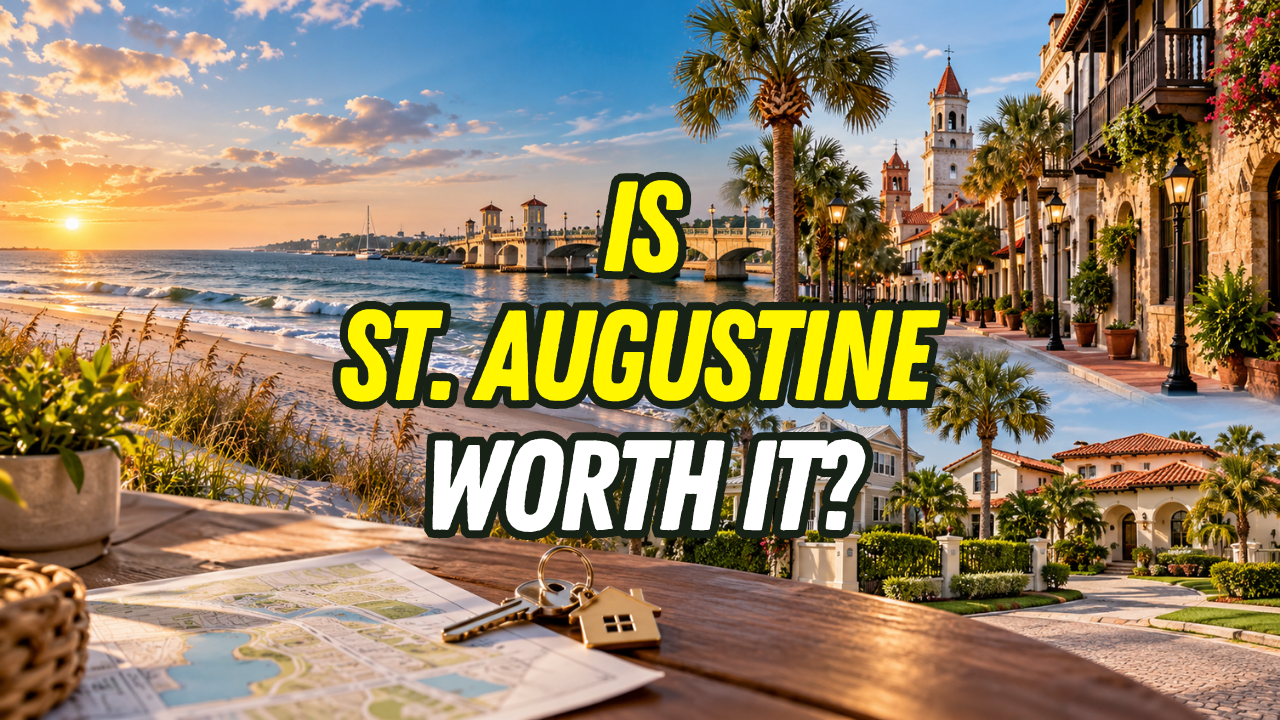
Yes, moving to St. Augustine, Florida can be worth it if you want coastal living, historic character, and a variety of residential communities. However, tourist traffic, insurance costs, flood exposure, and neighborhood differences can surprise newcomers. The right choice depends on how you plan to live, not just what you enjoy about visiting.
For many relocation buyers, St. Augustine offers an appealing combination of historic charm, beach access, outdoor recreation, and distinctive neighborhoods. But deciding whether to move here requires understanding what everyday life looks like beyond the attractions.
- Historic charm comes with trade-offs. Downtown offers distinctive architecture, restaurants, and attractions, but parking and traffic require planning.
- Beach living involves additional responsibilities. Insurance, maintenance, weather exposure, and storm preparation deserve attention.
- Neighborhoods vary significantly. Historic districts, beach communities, and inland developments offer different living experiences.
- Ownership costs extend beyond the mortgage. Property taxes, insurance, association fees, and maintenance affect affordability.
- Daily convenience matters. Proximity to grocery stores, healthcare, schools, and major roads can influence your quality of life.
What Surprises People About Everyday Life in St. Augustine?
Visiting St. Augustine and living here are two different experiences. As a visitor, you might spend your time exploring historic streets, enjoying waterfront restaurants, visiting local attractions, or relaxing on the beach. As a resident, your priorities become more practical. You begin thinking about grocery shopping, parking, commuting, home maintenance, and the roads you use every day.
That does not make St. Augustine less appealing. It simply means the lifestyle should be evaluated beyond a weekend getaway.
1. The Historic District Is Beautiful, but It Is Also a Major Tourist Destination
Downtown St. Augustine has a character that is difficult to duplicate. Historic buildings, narrow streets, local businesses, and cultural attractions contribute to its distinctive atmosphere.
For someone relocating from a newer suburban community, that environment can be especially appealing.
However, the historic street network developed long before modern automobiles. Many downtown streets are narrow or one-way, and convenient parking can be limited.
Residents who expect to drive directly to their favorite downtown restaurant and find parking every time may need to adjust their expectations. Festivals, weekends, and busy visitor periods can also affect travel through the area.
If you are considering a home near downtown, investigate whether the property has dedicated parking, what residential parking rules apply, and how you would handle everyday errands.
A home within walking distance of restaurants and attractions may appeal to someone who prioritizes walkability. Another buyer may prefer a quieter neighborhood and drive downtown occasionally.
Neither choice is automatically better. What matters is understanding the trade-offs before purchasing.
2. The Beach Lifestyle Comes With Responsibilities
Access to Atlantic beaches is one of the area's major attractions. Anastasia Island, St. Augustine Beach, Crescent Beach, and Vilano Beach offer different coastal environments.
But proximity to the ocean should not be evaluated on scenery alone.
Coastal conditions, salt exposure, storms, and property-specific insurance requirements can all affect the experience of owning a home near the water.
For example, a coastal property may need more frequent attention to exposed metal fixtures, exterior finishes, and equipment than a comparable inland home. Actual maintenance requirements depend on construction materials, age, location, and exposure.
The experience also changes with the seasons. Northeast Florida experiences hot, humid summers, and afternoon thunderstorms are common during warmer months. Atlantic hurricane season officially runs from June 1 through November 30.
Before purchasing a coastal property, review available maintenance records, arrange appropriate inspections, and obtain property-specific insurance quotes.
Beach access can be a wonderful part of everyday life. Understanding the responsibilities that accompany it helps buyers make more informed decisions.
3. Not Every St. Augustine Address Offers the Same Lifestyle
One of the most important relocation decisions involves understanding what people mean when they say they want to live in St. Augustine.
The historic city, beach communities, and inland sections of St. Johns County offer distinct housing options and living environments.
The historic core includes older homes and neighborhoods with architectural character. Anastasia Island provides a coastal setting with beach access and connections to downtown. Vilano Beach offers a smaller coastal community atmosphere.
Areas farther inland may provide newer residential developments, different community amenities, and alternative access to major roadways.
These differences matter because the right location depends on how you spend your time.
A buyer who wants to walk to downtown restaurants may prefer a different location from someone who needs convenient access to Interstate 95 or wants a newer home with certain neighborhood amenities.
Before narrowing your search, identify your three most important lifestyle priorities.
Those might include a shorter commute, beach proximity, a larger yard, access to local services, or lower overall ownership costs.
Which Greater St. Augustine Community Fits Your Lifestyle?
Comparing communities is a better starting point than assuming every property with a St. Augustine mailing address offers the same experience.
| Area | Lifestyle Appeal | What to Investigate |
|---|---|---|
| Historic St. Augustine | Historic architecture, culture, and downtown access | Parking, renovations, property condition, and visitor activity |
| Anastasia Island | Coastal recreation and beach access | Flood exposure, bridge routes, insurance, and maintenance |
| St. Augustine Beach | Beach-oriented residential lifestyle | Property type, seasonal activity, and ownership expenses |
| Vilano Beach | Coastal setting near historic downtown | Storm exposure, local roads, and property-specific costs |
| World Golf Village Area | Inland communities and golf-oriented amenities | Commute routes, HOA fees, and nearby services |
| Other Inland St. Johns County Communities | Different housing styles and neighborhood amenities | Travel times, development patterns, and total costs |
A useful exercise is to visit each area on a weekday and again during a busy weekend. Drive the routes you would normally use, visit nearby grocery stores, and explore the surrounding neighborhoods.
For relocation buyers, this firsthand comparison provides information that listing photographs and online descriptions cannot fully capture.
What Costs Can Surprise Buyers After Moving to St. Augustine?
Housing affordability involves more than finding a property within your purchase-price range. Your monthly and annual ownership expenses also matter.
Property Taxes May Change After Purchase
In Florida, the property taxes shown on a current listing may reflect the existing owner's exemptions and assessment history. Those amounts should not automatically be treated as the taxes a new buyer will pay.
Eligible Florida homeowners may qualify for a homestead exemption on their permanent residence. Homesteaded properties may also benefit from the Save Our Homes limitation on annual assessed-value increases.
Ask for a property-specific tax estimate based on your anticipated purchase price and eligibility rather than relying only on the seller's existing tax bill.
Homeowners Insurance and Flood Insurance Are Different
A major consideration in coastal Florida is understanding exactly what your insurance covers.
Most standard homeowners insurance policies do not cover flood damage. Separate flood insurance may be necessary or advisable depending on the property and its exposure.
A home does not have to be directly on the beach to face flooding risk. Exposure can vary significantly between individual addresses.
Before making a purchase decision, obtain homeowners insurance quotes and evaluate appropriate flood coverage. Confirm deductibles, exclusions, coverage limits, and lender requirements.
Association Fees and Maintenance Expenses Matter
Condominiums and some planned communities charge association fees. Depending on the community, these may support shared amenities, maintenance, reserves, or other expenses.
Buyers should review association budgets, reserves, assessments, restrictions, and available governing documents.
Condominium buyers should also investigate applicable structural inspection and reserve requirements.
Older single-family homes can present different expenses, including repairs or renovation needs. New construction may reduce some immediate repair concerns but can still involve substantial insurance, taxes, association fees, and maintenance.
Comparing total ownership costs is more useful than assuming one property type is automatically less expensive.
What Should You Know About Flooding and Storm Preparation?
St. Augustine's Northeast Florida coastal location makes storm preparedness an important part of evaluating a property.
St. Johns County maintains evacuation zones based on factors such as storm-surge vulnerability, elevation, and isolation. Buyers should verify the designated evacuation zone for every property they consider.
An evacuation zone is not the same as a FEMA flood insurance risk designation. Each provides different information.
A home farther inland may have a different risk profile from a property near the ocean, an inlet, or a low-lying waterway. However, inland locations are not automatically free from flooding.
Before purchasing, review available seller disclosures, investigate documented flooding history, examine applicable flood maps, and discuss property-specific concerns with qualified inspectors and insurance professionals.
You should also understand local evacuation routes and how to receive emergency alerts.
The goal is not to assume every coastal property is too risky. It is to understand the risks, responsibilities, and costs associated with the specific home you are considering.
Common Misconceptions About Moving to St. Augustine
Relocation buyers can make better decisions when they separate the area's appeal from assumptions about everyday life.
- Every St. Augustine neighborhood feels like historic downtown. The greater area includes beach communities, historic neighborhoods, and inland developments with very different characteristics.
- Living near the beach means spending every day there. Work schedules, weather, parking, and household responsibilities still influence how frequently residents visit the beach.
- A home outside a high-risk flood zone has no flood risk. Flooding can occur outside designated high-risk areas. Property-specific conditions matter.
- New construction always means fewer overall expenses. New homes still have insurance, taxes, maintenance, and potentially significant association fees.
- A short distance on a map means a short drive. Bridge crossings, major intersections, and visitor activity can affect actual travel times.
Important Considerations Before Buying a Home in St. Augustine
Before making an offer, evaluate the property as a future resident rather than as a visitor.
- Test your daily routine. Drive from the neighborhood to your likely destinations at realistic travel times.
- Verify ownership costs. Request insurance quotes, estimated property taxes, and applicable association information.
- Review flood exposure. Check FEMA flood maps, local evacuation zones, and available property history.
- Understand property restrictions. Verify rental rules, renovation limitations, parking arrangements, and association requirements where applicable.
- Investigate the property's condition. Obtain appropriate inspections and evaluate potential repair needs.
- Compare multiple communities. Explore different areas before deciding which location provides the best balance of cost, convenience, and lifestyle.
These steps can help reduce surprises after closing. They also make it easier to distinguish a house you enjoy visiting from a home that fits your everyday life.
Frequently Asked Questions About Moving to St. Augustine
Is St. Augustine, Florida a good place to live?
St. Augustine can be an appealing place to live if you enjoy historic surroundings, coastal activities, and varied residential communities. Whether it suits you depends on your budget, neighborhood preferences, daily routine, and comfort with coastal weather considerations.
Is living in St. Augustine expensive?
Costs vary by neighborhood and property. Beyond the mortgage, buyers should consider property taxes, homeowners insurance, potential flood coverage, association fees, utilities, and maintenance. Obtain current, property-specific estimates before deciding what you can comfortably afford.
What are the disadvantages of living in St. Augustine?
Potential disadvantages include visitor traffic, downtown parking limitations, hot and humid summers, hurricane preparedness, and variable insurance or maintenance expenses. The importance of each depends on where and how you choose to live.
What should I check before buying a home in St. Augustine?
Review flood and evacuation information, insurance quotes, property condition, estimated taxes after purchase, association restrictions, and commute times. Visit the neighborhood at different times to understand how it functions beyond the listing.
Thinking About Moving to St. Augustine? Let's Find Out If It's Right for You.
St. Augustine offers historic character, coastal recreation, and a wide range of communities to explore. But the best relocation decision is not simply finding a home you love in photographs. It is finding a place that fits your everyday life and financial priorities.
Whether you are considering a historic property, a beach-area home, or a newer inland community, the important questions remain the same: What will it cost? How will it fit your routine? And what should you know before making an offer?
The Kim Devlin Team can help you explore Greater St. Augustine, compare communities, and identify important questions to address before purchasing.
If you are considering relocating, contact the Kim Devlin Team to discuss your preferred lifestyle, housing goals, and the neighborhoods that may fit your needs.
Check out this article next