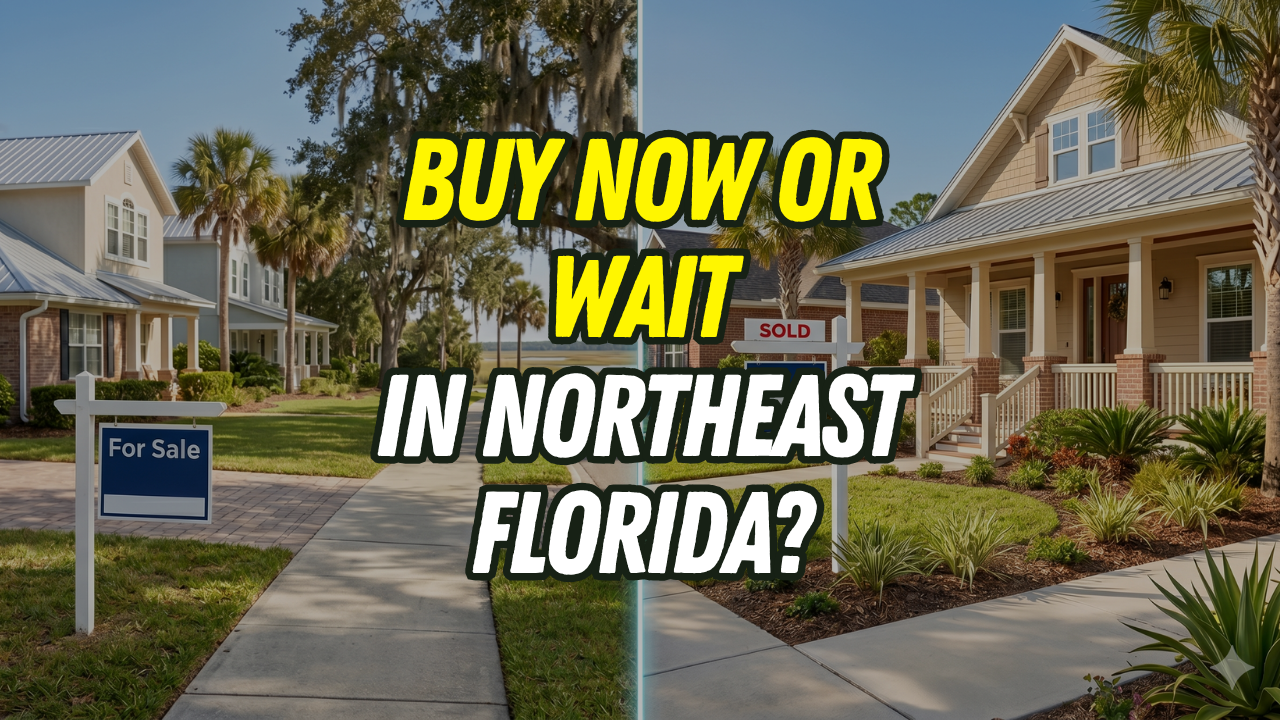
- Move forward if you are financially prepared and find a home that fits your long-term needs.
- Wait if your budget is stretched or you have not reviewed the full cost of ownership, including insurance, taxes, HOA fees, and maintenance.
- Do not wait only because of mortgage rates. Rates can change, but so can prices, inventory, and competition.
- Compare neighborhoods carefully. St. Augustine, Ponte Vedra, Palm Coast, St. Augustine Beach, and Anastasia Island are not the same market.
- Use today’s market to negotiate wisely. More inventory and longer market times can create opportunities for serious buyers.
What Is Happening in the Northeast Florida Housing Market Right Now?
Northeast Florida is not in a frozen market. It is a more selective market. Buyers are still active, but they are being more careful about price, condition, insurance costs, location, and long-term value. According to NEFAR’s March 2026 market report, the Northeast Florida single-family median sales price rose 1.5% from February to $395,000. Closed sales increased 22.6%, new listings rose 14.6%, and active inventory increased 9.1%. That combination matters because it shows both renewed buyer activity and more available choices. That does not mean every buyer should rush. It means the market is giving prepared buyers more data, more leverage, and more opportunity to make a careful decision. In St. Johns County,
Zillow reported an average home value of $489,323 as of March 31, 2026, down 3.2% year-over-year, with homes going pending in about 64 days. Zillow also reported that 81.9% of sales in Saint Johns County were under list price as of February 28, 2026. That is an important signal for buyers: list price is not always final price. In St. Augustine, Zillow reported an average home value of $431,116 as of March 31, 2026, down 3.1% year-over-year, with homes going pending in about 66 days. In Palm Coast, Zillow reported an average home value of $342,019, down 3.4% year-over-year, with homes going pending in about 51 days. These numbers point to a market where buyers should be thoughtful, not passive. The right property may still move quickly, especially if it is well priced, well maintained, and in a strong location. But overpriced homes, homes with condition issues, or properties with higher carrying costs may give buyers more room to negotiate.
Why Might Moving Forward Make Sense for Northeast Florida Buyers?
Moving forward can make sense when the decision is based on readiness, not pressure. If you have stable income, a clear budget, realistic expectations, and a long-term reason for buying, today’s market may offer better conditions than waiting for a perfect moment that may never arrive. One reason is inventory. More available homes give buyers more ability to compare. That matters in Northeast Florida because each area serves a different lifestyle. Ponte Vedra may appeal to buyers focused on schools, coastal access, golf communities, and proximity to Jacksonville. St. Augustine may appeal to buyers who want historic character, local culture, and a mix of primary homes, second homes, and investment properties. Palm Coast may appeal to buyers looking for more relative affordability, newer inventory, or access to both Flagler and St. Johns County lifestyles. Another reason is negotiation.
When a large share of homes sell under list price, buyers may have opportunities to discuss price, closing costs, repairs, rate buydowns, inspection items, or flexible closing dates. That does not mean every seller will negotiate heavily. It means buyers should evaluate each listing based on days on market, recent price reductions, comparable sales, seller motivation, and property condition. Mortgage rates are still a major factor. Freddie Mac reported that the 30-year fixed mortgage rate averaged 6.30% as of April 30, 2026. That is not low compared with the ultra-low-rate years, but it was lower than the 6.76% average from one year earlier. Buyers who can afford the payment today may prefer to secure the right property now and revisit refinancing later if rates improve. The key is not whether the market is “good” in a general sense. The better question is whether a specific home, at a specific price, with specific ownership costs, makes sense for your life or investment goals.
When Should Buyers Wait Before Purchasing in Northeast Florida?
Waiting can be the right decision if buying would put you in a weak financial position. A home purchase should not depend on optimism alone. It should work under realistic assumptions. You may want to wait if you do not yet know your full monthly cost. In Northeast Florida, the purchase price is only one part of the equation. Buyers also need to understand property taxes, homeowners insurance, flood insurance where applicable, HOA or condo fees, CDD fees in some planned communities, maintenance, utilities, and future repair risk. This is especially important near the coast. St. Augustine Beach, Anastasia Island, parts of Ponte Vedra, and waterfront or near-water properties may require closer review of flood zones, wind coverage, elevation, insurance availability, and long-term maintenance exposure. A home may look affordable based on price but become less attractive once the full carrying cost is clear. Waiting can also make sense if your life plan is uncertain.
If you may relocate soon, change jobs, shift family needs, or move again within a short period, buying may not be the best fit unless the property also works as a rental or long-term hold. Transaction costs matter. Buying and selling too quickly can reduce or erase gains, especially in a market that is no longer rising at the pace seen during the pandemic years. Investors should also be cautious. A property that looks appealing emotionally may not work financially. Before buying an investment property in St. Augustine, Palm Coast, Ponte Vedra, or Anastasia Island, you need to verify rental rules, HOA restrictions, local ordinances, seasonal demand, insurance costs, maintenance reserves, and realistic rental income. Do not buy based on best-case projections. Waiting is not failure. Waiting is smart when the numbers, timing, or property fit are not right.
How Should Buyers Compare St. Augustine, Ponte Vedra, Palm Coast, St. Augustine Beach, and Anastasia Island?
Buyers should avoid treating Northeast Florida as one single market. The region has connected geography, but very different buyer profiles, price points, and property considerations. St. Augustine offers a mix of historic homes, newer communities, townhomes, condos, and investment-oriented properties. Buyers are often drawn to the area for its character, walkability in certain pockets, restaurants, history, and access to both downtown and the beaches. The tradeoff is that older properties may require more due diligence around age, updates, insurance, parking, flood exposure, and maintenance. St. Johns County remains one of the more desirable and expensive parts of Northeast Florida.
Buyers often look here for schools, master-planned communities, newer construction, and access to Jacksonville, St. Augustine, and the coast. The challenge is affordability. Even if prices have softened in some areas, monthly payment pressure can still be significant. Ponte Vedra and Ponte Vedra Beach tend to attract buyers focused on lifestyle, schools, golf, luxury properties, and beach proximity. These areas can hold value well because demand is tied to lifestyle and location. However, buyers should carefully review property condition, insurance, HOA rules, and whether the premium for location fits their long-term plans.
Palm Coast may offer more relative affordability compared with parts of St. Johns County and Ponte Vedra. It can appeal to buyers who want space, newer homes, and access to beaches without the same entry price as some higher-cost coastal communities. Investors and relocating buyers should still review rental demand, insurance, neighborhood-specific trends, and commute patterns. St. Augustine Beach and Anastasia Island are lifestyle-driven markets. Buyers here often care about beach access, short-term or seasonal use, walkability, and coastal living. These areas require careful review of flood risk, insurance, rental restrictions, condo or HOA documents, parking, and maintenance exposure. The best area depends on what you are optimizing for: lifestyle, schools, budget, rental potential, appreciation, commute, beach access, or long-term stability.
What Are the Biggest Misconceptions About Buying Right Now?
One common misconception is that buyers should wait until rates drop. That sounds logical, but it is incomplete. If rates fall meaningfully, more buyers may re-enter the market, which can increase competition and reduce negotiating leverage. A lower rate does not automatically mean a better deal if prices rise or bidding becomes more aggressive.
Another misconception is that a softer market means every seller is desperate. That is not true. Some sellers have equity, time, and no urgency. Others may be more flexible because their home has been sitting, they have already moved, or they need to close by a certain date. The opportunity is not the same on every listing.
A third misconception is that the lowest price is always the best buy. In coastal and high-demand areas, condition, insurance, location, construction quality, rental rules, and future resale value matter just as much as price. A cheaper home with major insurance, flood, structural, or renovation concerns may become more expensive than a better-positioned home with a higher purchase price. Buyers also sometimes assume online estimates tell the full story. They do not. Automated values can be useful for broad context, but they may miss upgrades, condition, lot quality, views, insurance realities, rental restrictions, and micro-location differences. In areas like St. Augustine, Ponte Vedra, and Anastasia Island, those details can materially affect value.
What Should Buyers Review Before Making an Offer?
Before making an offer, buyers should review the full financial picture. That includes purchase price, loan terms, estimated taxes, insurance, HOA or condo fees, CDD fees if applicable, utilities, inspection risk, and reserves for maintenance. You should also review comparable sales, not just active listings. Active listings show what sellers want. Closed sales show what buyers actually paid. Pending sales, when available, help show current demand, although final prices are not always public until closing. For condos, townhomes, and HOA communities, document review is critical. Buyers should examine rental rules, pet rules, reserves, assessment history, insurance coverage, maintenance responsibilities, architectural restrictions, and any pending litigation or major repairs.
This is especially important for buyers considering beach-area condos, investor-friendly properties, or second homes. For single-family homes, inspection strategy matters. In today’s market, some sellers may be more open to repairs or credits than they were a few years ago. But buyers still need to be reasonable. Focus first on safety, structure, roof, plumbing, electrical, HVAC, moisture, drainage, and insurance-related items. For investors, the offer should be based on real numbers. Estimate conservative rent, vacancy, management costs, insurance, repairs, taxes, HOA fees, utilities, cleaning, maintenance, and capital reserves. A property should not depend on perfect occupancy or optimistic appreciation to make sense.
What Is the Practical Answer for Buyers Right Now?
The practical answer is this: move forward if the right property fits your budget, timeline, and goals. Wait if you are not financially ready, unclear on location, or uncomfortable with the full cost of ownership. In Northeast Florida, today’s market gives buyers something they did not always have during the most competitive years: more room to think. That does not mean unlimited time. Strong properties in desirable locations can still attract attention quickly. But buyers are no longer forced to make every decision in panic mode. If you are looking in St. Augustine, St. Johns County, Ponte Vedra, Palm Coast, St. Augustine Beach, or Anastasia Island, the smartest path is not to guess the market. It is to compare specific properties, understand local pricing, review ownership costs, and make a decision based on facts.
“We had such a great experience with Kim Devlin, I had to write a review. We are interested in St. Augustine and she took the time to explore the area with us, answered all of our questions, and even showed us some great local places to go. She is a wealth of information and we could tell she really loves living in St. Augustine. We aren't ready quite yet, but when we are, likely next year, Kim will be our Realtor.” — Lisa C.
FAQ
Is now a good time to buy a home in Northeast Florida?
Yes, it can be a good time for financially prepared buyers who find the right home at the right terms. Improved inventory and more realistic seller expectations may create opportunities, especially compared with the highly competitive pandemic-era market.
Should buyers wait for mortgage rates to drop before buying?
Not necessarily. Waiting for rates can backfire if lower rates bring more buyer competition or higher prices. The better approach is to buy only if the current payment works, then treat any future refinance opportunity as a bonus rather than the foundation of the decision.
Which areas should buyers compare before deciding?
Buyers should compare St. Augustine, St. Johns County, Ponte Vedra, Palm Coast, St. Augustine Beach, and Anastasia Island because each area has different pricing, lifestyle benefits, insurance considerations, commute patterns, and resale dynamics.
Next Steps
If you are trying to decide whether to wait or move forward in Northeast Florida, the most useful next step is to look at the numbers for your specific situation. A broad market headline cannot tell you whether a particular home in St. Augustine, Ponte Vedra, Palm Coast, St. Augustine Beach, Anastasia Island, or St. Johns County is a smart buy. The Kim Devlin Team can help you compare neighborhoods, evaluate current listings, review pricing trends, understand local ownership costs, and decide whether moving forward now makes sense for your goals. If you are not ready yet, that is okay too. A good buying strategy starts with clarity, not pressure. Contact the Kim Devlin Team when you are ready to talk through your options and make a confident, informed decision.
Check out this article next