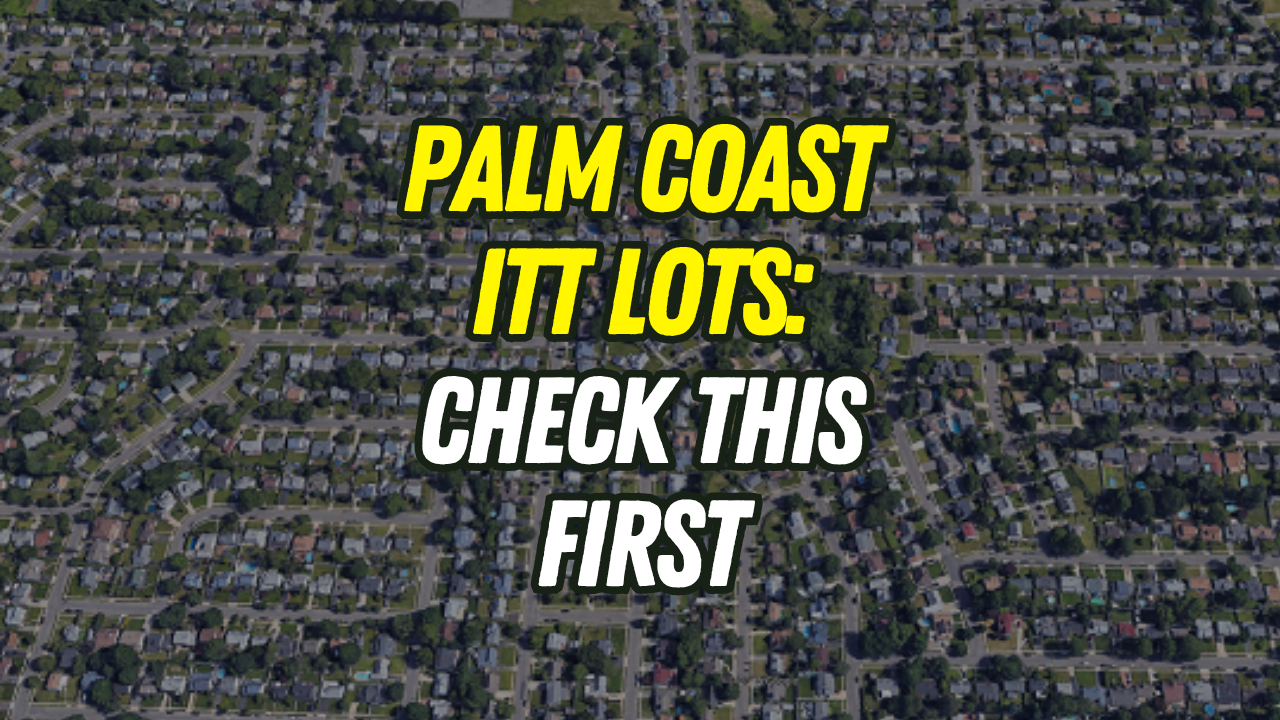
Before buying an ITT lot in Palm Coast, you should check drainage, elevation, swales, flood-zone status, wetlands, and whether the lot can meet current grading and stormwater requirements. A vacant lot may look simple from the street, but drainage issues can affect buildability, construction cost, insurance, permitting, and long-term resale value. The safest approach is to verify the lot with the city, a builder, a surveyor, and, when needed, a civil engineer before you commit.
What drainage issues should you check before buying an ITT lot in Palm Coast?
- Check how water is supposed to leave the lot. Many residential lots are expected to drain toward the front swale or an approved drainage feature.
- Look at the front swale and driveway culvert area. A blocked, shallow, damaged, or poorly graded swale can affect how water moves away from the lot.
- Review the lot’s elevation compared with the road and nearby homes. Low lots may require additional fill, grading, engineering, or design adjustments.
- Verify flood-zone status before buying. A flood-zone issue may affect insurance, construction standards, finished floor elevation, and buyer confidence.
- Check for wetlands or wetland indicators. Standing water, hydric soils, and wetland vegetation can create permitting and buildability concerns.
- Ask whether the planned home design fits the lot. The home, driveway, patio, air-conditioning pad, PEP tank, and hardscaping cannot interfere with required drainage flow.
Why do Palm Coast ITT lots need extra drainage due diligence?
Palm Coast has many older platted residential lots, including ITT-platted infill lots. Some are surrounded by already-built homes, older swales, mature trees, culverts, and neighboring grades that may not match today’s construction standards. That matters because a vacant lot is not evaluated in isolation. It has to work with the road, the swale, the adjacent lots, and the broader stormwater system.
The main issue is not simply whether the lot is “dry” on the day you walk it. A lot can look fine during a dry week and still have serious drainage concerns after heavy rain. Palm Coast receives strong seasonal rainfall, and the city’s stormwater system relies on several connected parts, including swales, ditches, canals, pipes, water-control structures, and stormwater storage areas. If one part of that system is blocked, shallow, damaged, or poorly aligned, water may pond where you do not want it.
For buyers and investors, this creates a simple rule: do not judge an ITT lot only by price, location, or whether nearby homes have been built. You need to understand how the lot drains, where the water goes, and whether the proposed home can be built without creating problems for neighboring properties.
This is especially important if your plan is to buy the lot now and build later. Regulations, construction costs, fill requirements, engineering expectations, and flood insurance considerations can change over time. A lot that seems inexpensive upfront may become more expensive once you account for grading, drainage design, elevation requirements, tree removal, wetlands review, utility placement, and builder-specific site work.
How can poor drainage affect whether a Palm Coast ITT lot is buildable?
Poor drainage does not always mean a lot is unbuildable, but it can make the building process more complex. The concern is whether the lot can support a home, driveway, utility equipment, hardscaping, and finished grading while still moving stormwater properly.
A builder may need to raise the finished floor elevation, add fill, modify the driveway design, adjust the home’s placement, or redesign the drainage plan. These changes can increase cost. They can also affect whether a particular floor plan fits the lot. A home plan that works on one Palm Coast lot may not work on another lot with different elevation, swale, or neighboring-grade conditions.
Drainage can also affect the relationship between the new home and existing neighboring homes. When a vacant infill lot is developed between already-built properties, the new grading must be handled carefully. The goal is not just to keep the new home dry. The grading also needs to avoid pushing water onto adjacent properties. That is why surveys, elevation points, flow arrows, and drainage features matter.
Buyers should pay close attention to lots that appear lower than the road, lower than neighboring yards, heavily wooded with wet soil, or located near canals, ditches, conservation areas, or low-lying sections. These conditions do not automatically eliminate the lot, but they should trigger a deeper review before purchase.
A practical way to think about it is this: the purchase price is only one part of the real cost. The true cost is the lot price plus site preparation, fill, clearing, grading, drainage design, permitting, utility work, and any additional engineering needed to make the lot buildable.
“Kim Devlin has been a huge help to us, she is knowledgable, easy to talk to, always available and made the process of buying a new build in Palm Coast easy and without worry.” —Christine O.
What should you ask before making an offer on an ITT lot in Palm Coast?
Before you make an offer, ask direct questions that help you understand the lot’s real condition. A low asking price is not enough. You need to know what problems may appear after survey, engineering, permitting, or builder review.
Start with these questions:
- Is the lot in a FEMA flood zone?
- Has a recent survey been completed?
- Are there visible low spots, standing water, or signs of ponding?
- Does the front swale appear clear, shaped, and functional?
- Are the driveway culverts on nearby properties open and flowing?
- Does the lot appear lower than the road or adjacent homes?
- Are there wetlands, wetland vegetation, or saturated soils?
- Will the home need extra fill or a higher finished floor elevation?
- Can the preferred house plan fit without interfering with drainage?
- Will patios, walkways, AC pads, utility equipment, or the PEP tank affect drainage flow?
These questions are not meant to scare buyers away from ITT lots. They are meant to prevent surprises. Many buyers focus on whether a lot is in a good neighborhood or whether the price is below nearby sales. Those things matter, but drainage can change the economics of the deal quickly.
If you are an investor, this is even more important. Your profit depends on cost control. If you underestimate site work, fill, engineering, or permitting delays, a lot that looked like a deal can become a thin-margin project.
How should you inspect the swale, culvert, and road frontage?
The front of the lot tells you a lot. In Palm Coast, swales are a major part of the local drainage system. They are the shallow channels near the roadway that help move stormwater. Some standing water in a swale can be normal, but blocked flow, heavy sediment, deep rutting, overgrowth, or damaged culvert areas should be reviewed carefully.
When visiting the lot, look at the swale from both directions. Ask yourself whether water appears to have a clear path. Check whether grass, leaves, dirt, trash, or collapsed culvert ends are blocking movement. Look at the neighboring driveways. If the adjacent culverts are clogged or set incorrectly, drainage near your future driveway may be affected.
Also look at the road elevation compared with the lot. If the lot sits noticeably below the road, the builder may need additional fill or a drainage plan that solves the elevation difference. If nearby homes sit much higher than the vacant lot, ask whether the finished grading can be designed without trapping water or redirecting water where it should not go.
Photos can help, but they are not enough. A licensed surveyor can provide elevation data. A builder can estimate construction implications. A civil engineer can review drainage feasibility when conditions are more complicated. For serious buyers, these steps are not overkill. They are part of responsible due diligence.
Why should you check flood zones and wetlands before buying?
Flood-zone and wetland questions should be answered early, not after closing. A flood zone may affect insurance, construction elevation, financing, buyer perception, and future resale. A wetland issue can affect whether and how the lot can be developed.
Do not rely only on listing comments. Listing descriptions may not include every drainage, flood, or wetland concern. Instead, verify the property through official mapping resources and professional review. FEMA flood maps can help identify flood-zone status. Palm Coast also provides flood-protection information and directs property owners to flood-map resources.
Wetlands require a different level of caution. A wooded lot with standing water, saturated soils, or wetland-type vegetation may need further review. Florida wetlands are identified through technical factors such as water conditions, soil characteristics, and vegetation. A buyer should not assume a lot is free of wetland issues just because it is platted or because homes exist nearby.
The key is to separate possibility from certainty. A map can suggest a concern. A professional review can help confirm what the concern means. If there is any doubt, ask for help before your inspection period expires.
What documents should a buyer review during due diligence?
A buyer should review more than the MLS listing and the property appraiser page. For an ITT lot in Palm Coast, the due-diligence file should include documents and checks that help answer one main question: can this lot support the home you want without drainage problems?
Useful items may include:
- A current boundary and topographic survey
- Elevation data tied to an accepted benchmark
- FEMA flood-zone information
- Wetland screening or professional wetland review, if needed
- Builder site evaluation
- Estimated fill and grading requirements
- Swale and culvert condition review
- Utility availability and PEP tank placement considerations
- Setback and zoning confirmation
- Any city stormwater, building, or permitting guidance relevant to the parcel
The goal is not to collect paperwork for the sake of paperwork. The goal is to identify problems while you still have negotiating power. Once you close, the drainage issue is yours.
What are the most common misconceptions about buying ITT lots in Palm Coast?
One common misconception is that every platted lot is automatically easy to build on. A platted lot may still have drainage, elevation, wetland, access, utility, or permitting issues that affect cost and timing.
Another misconception is that if the lot is surrounded by homes, it must be fine. Nearby construction is helpful context, but it does not prove your lot has the same elevation, soil, drainage, or buildability profile. Infill lots can be tricky because the new home has to fit into an existing drainage environment.
A third misconception is that the builder will solve everything later. A good builder is valuable, but you want builder input before you buy, not after. Once you own the lot, your options may be limited. The better strategy is to involve the builder, surveyor, and city resources during the contract period.
The final misconception is that drainage is only a construction issue. It is also a resale issue. Future buyers may ask the same questions you are asking now. If the lot or finished home has visible drainage problems, ponding, swale issues, or flood concerns, it can affect marketability later.
What important considerations should investors understand before buying?
Investors should treat Palm Coast ITT lots as site-specific assets. Two lots in the same neighborhood can have very different construction costs. One may be relatively straightforward. Another may require more fill, engineering, drainage planning, tree work, or design adjustments.
The numbers should include more than acquisition cost. Estimate your full basis before buying. That means lot price, closing costs, surveys, environmental review, clearing, fill, grading, engineering, permitting, utility work, builder site costs, carrying costs, and resale timeline.
Investors should also think about exit strategy. Are you buying to hold, build, flip, or package with a builder? Each strategy has different risk. If you are holding, future regulatory or cost changes matter. If you are building, drainage and permitting timelines matter immediately. If you are flipping the lot, the next buyer will likely ask for the same due-diligence answers.
The best investment lots are not always the cheapest. They are the lots where the major risks are understood before closing.
“Kristen Pytel met our needs in every way. She listened to what we wanted and didn't want in a home in Palm Coast. She didn't waste our time showing us houses that didn't meet the criteria. She was there for us every step of the way from beginning to closing on our new home.” —C.R.
FAQ
Are all ITT lots in Palm Coast buildable?
No. Many ITT lots may be buildable, but each lot must be reviewed individually. Drainage, elevation, flood zone, wetlands, utilities, setbacks, access, and current city requirements can all affect whether a lot is practical to build on.
Should I get a survey before buying a Palm Coast ITT lot?
Yes, a survey is one of the most important due-diligence tools. For drainage concerns, a topographic survey is especially useful because it shows elevation changes, low areas, and how the lot relates to the road and neighboring properties.
Can a low-priced ITT lot still be a bad deal?
Yes. A low price can be attractive, but it may not reflect the full cost of building. If the lot needs significant fill, drainage engineering, wetland review, or design changes, the total project cost can rise quickly.
Who should I talk to before buying an ITT lot in Palm Coast?
Talk to a local real estate professional, a builder, a surveyor, and, when needed, a civil engineer. You may also need guidance from the appropriate city departments regarding stormwater, permitting, utilities, and building requirements.
What is the safest next step before buying a Palm Coast ITT lot?
The safest next step is to evaluate the lot before your inspection or due-diligence period ends. Confirm drainage, elevation, flood zone, wetlands, utilities, and builder feasibility before you remove contingencies or close.
Next Steps
Buying an ITT lot in Palm Coast can be a smart move, but only when the drainage and buildability questions are answered upfront. Before you commit, make sure you understand how the lot drains, whether the home you want can fit, what site work may be required, and whether any flood-zone or wetland concerns exist.
For buyers, investors, or anyone considering a Palm Coast lot purchase, the Kim Devlin Team can help you ask the right questions, review the right due-diligence items, and connect with the right local professionals before you move forward.
Contact the Kim Devlin Team before buying an ITT lot in Palm Coast so you can make a clearer, better-informed decision.
Check out this article next