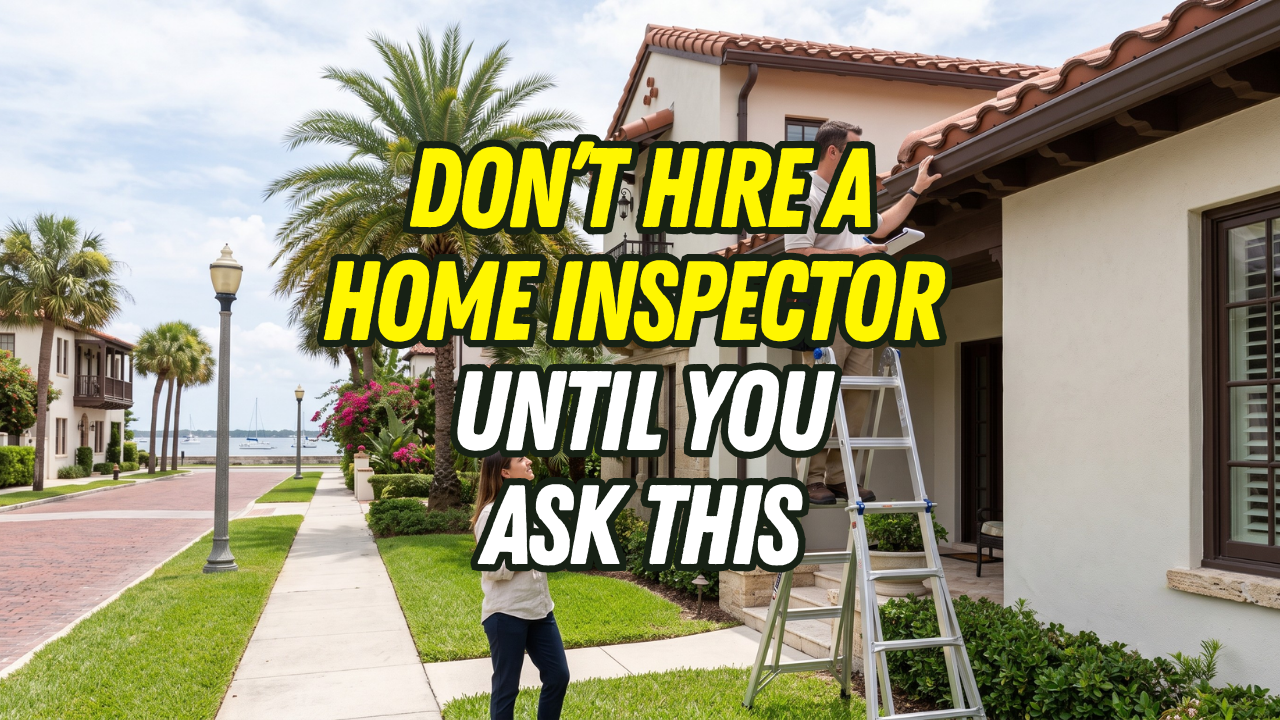
Verify the inspector’s Florida license, confirm relevant local experience, review a sample report, ask what is excluded, and compare qualifications rather than choosing on price alone. A reliable inspector should explain findings clearly, document visible concerns, and remain independent from the outcome of the sale.
How to Choose a Reliable St. Augustine Home Inspector
- Verify the inspector’s active Florida license.
- Look for experience with St. Augustine property types.
- Review a complete sample inspection report.
- Confirm the inspection scope and exclusions in writing.
- Ask about insurance, training, and specialized inspections.
- Evaluate communication and availability.
- Compare overall value instead of choosing the lowest fee.
A home inspection cannot guarantee that a property is free from defects. It is a visual evaluation of accessible systems and components within the scope of the inspection agreement. Its value depends heavily on the inspector’s qualifications, process, attention to detail, and ability to explain what was observed.
That distinction matters in St. Augustine. The area includes historic homes, coastal properties, condominiums, newer construction, planned communities, investment properties, and homes that have been modified over many years. The right inspector should understand the kind of property you are considering and know when a concern requires further evaluation by a specialist.
1. Verify the Inspector’s Florida License
Begin with Florida’s official professional-license search. Do not rely exclusively on a business card, website badge, online advertisement, or verbal claim.
Search the inspector’s full name or license number and confirm that the license is active. Make sure the name on the license matches the person who will actually perform the inspection. If you are hiring a company, ask which individual inspector will be assigned to the property.
License verification is only the first step. A license confirms that the person has met applicable state requirements, but it does not tell you whether the inspector communicates well, produces useful reports, or has meaningful experience with your type of property.
You should therefore combine license verification with questions about:
- Years of inspection experience
- Professional education and continuing training
- Experience with older, coastal, condominium, or new-construction properties
- General liability and errors-and-omissions insurance
- Professional memberships or additional certifications
- The process used when an inspector cannot access part of the property
A reliable inspector should answer these questions directly and should not object to reasonable verification.
2. Look for Experience With St. Augustine Properties
General inspection experience matters, but local experience can add important context. St. Augustine contains a wide range of construction ages, materials, architectural styles, community types, and environmental conditions.
An inspector working in the area should be prepared to evaluate visible conditions involving roofing, drainage, moisture, electrical systems, plumbing, heating and cooling equipment, foundations, exterior components, windows, doors, insulation, and accessible structural elements within the agreed scope.
Depending on the home, you may also need to discuss:
- Visible evidence of water intrusion or elevated moisture
- Roof age, condition, repairs, and remaining useful life
- Corrosion affecting exterior equipment or metal components
- Older electrical, plumbing, or HVAC systems
- Previous renovations or additions
- Crawl spaces, raised foundations, or limited-access areas
- Condominium boundaries and association responsibilities
- Pool, spa, dock, bulkhead, or seawall evaluations
- Well, septic, termite, mold, chimney, or sewer-line inspections
Not every home requires every specialized service. The inspector should explain what is included, identify limitations, and recommend additional evaluation when a visible condition falls outside the inspector’s expertise or inspection scope.
Ask how many similar properties the inspector has evaluated. For example, experience with new suburban construction does not automatically establish expertise with a significantly older downtown property.
3. Ask to See a Sample Inspection Report
A sample report is one of the best ways to evaluate an inspector before hiring. It shows how the inspector organizes information, documents concerns, uses photographs, and distinguishes significant findings from routine maintenance.
A useful report should be understandable to someone who is not a contractor. Look for:
- Clear descriptions of observed conditions
- Photographs showing the location of important findings
- An explanation of why a condition may matter
- Recommendations for repair or further evaluation
- Identification of inaccessible or uninspected areas
- Consistent terminology and logical organization
Be cautious when a sample report consists mostly of checkboxes, unexplained technical language, or broad disclaimers. The report should not exaggerate every cosmetic imperfection, but it also should not minimize potentially material concerns.
Ask how quickly the completed report will be delivered. Your purchase agreement may include deadlines for inspections, negotiations, notices, or contract decisions. Your real estate professional can explain the applicable contractual timeline, but the inspector must be able to deliver the report within that window.
4. Confirm Exactly What the Inspection Includes
Do not assume that every inspection company offers the same service. Request the inspection agreement before the appointment and read the scope, limitations, exclusions, fee, cancellation policy, and report-delivery terms.
- Roofing and roof drainage
- Exterior walls, windows, doors, and grading
- Foundation and visible structural components
- Electrical service, panels, outlets, and visible wiring
- Plumbing supply, drainage, fixtures, and water heater
- Heating and cooling systems
- Attic, insulation, and ventilation
- Interior walls, ceilings, floors, stairs, and installed appliances
Then ask what is excluded. Common services such as termite inspections, mold assessments, sewer scopes, septic inspections, chimney inspections, pool inspections, seawall evaluations, and environmental testing may require separate providers or additional fees.
You should also ask how the inspector handles components that are inaccessible, unsafe to operate, shut off, concealed, or blocked by personal property. A trustworthy inspector documents those limitations rather than implying that every part of the property was fully evaluated.
5. Ask About Insurance, Tools, and Specialized Training
Ask whether the inspector carries general liability insurance and errors-and-omissions coverage. You may also request documentation of relevant training or certifications.
Tools can support an inspection, but they do not replace judgment. Moisture meters, infrared cameras, electrical testers, gas detectors, drones, and other equipment may provide additional observations when used appropriately. Ask which tools the inspector commonly uses and whether any related services cost extra.
Be cautious when an inspector markets technology as proof that nothing can be missed. Even sophisticated equipment has limitations, and a standard home inspection is generally visual and noninvasive.
The inspector should also know when to recommend a licensed contractor, engineer, roofer, electrician, plumber, HVAC technician, pest professional, mold assessor, or other specialist. Referring an issue for further evaluation is not a weakness. It shows that the inspector understands the limits of a general inspection.
6. Evaluate Communication Before the Appointment
The inspection report is important, but so is the inspector’s ability to explain it. Pay attention to communication from the first interaction.
A reliable inspector should clearly explain:
- The fee and services included
- How long the inspection may take
- Whether and when you may attend
- When the report will be delivered
- How follow-up questions are handled
- Whether a reinspection or repair review is available
Ask whether the inspector will discuss the most important findings before leaving the property. Seeing the location of a defect can be more helpful than reading about it later without context.
Good communication does not mean predicting repair costs without sufficient information or telling you whether to buy the home. The inspector’s role is to report visible conditions and explain their significance within the inspection scope. Your decision should account for the inspection, contract, budget, professional repair estimates, insurance, financing, and broader goals.
7. Compare Value Instead of Selecting the Lowest Price
Inspection fees vary based on property size, age, features, location, and additional services. A low fee is not automatically a warning sign, and a high fee does not guarantee quality. Price should be evaluated alongside qualifications, scope, reporting, availability, insurance, and local experience.
Before comparing quotes, make sure they cover the same services. One company may quote only a general inspection, while another may include additional evaluations or insurance-related reports.
Ask for a written breakdown showing:
- The base inspection fee
- Additional charges based on size or age
- Optional inspection services
- Insurance-related reports, when applicable
- Travel or access charges
- Reinspection fees
The cheapest inspection can become expensive if the report is unclear, important areas are excluded without explanation, or the inspector lacks relevant experience. Focus on whether the service will give you useful, timely information for your decision.
Common Mistakes When Hiring a Home Inspector
Hiring without verifying the license: Always check the official Florida licensing portal rather than relying solely on advertising.
Choosing only from online star ratings: Reviews can reveal useful patterns, but they should be combined with license verification, sample reports, qualifications, and direct questions.
Assuming all inspections include the same services: Read the agreement and confirm exclusions before the inspection date.
Skipping the inspection because the home is new: New construction can still have installation defects, incomplete work, or items requiring correction. Ask about phased inspections and final walkthrough support when buying a new build.
Expecting the inspector to find every possible problem: A home inspection has limitations. Concealed defects and conditions that are inaccessible or not visible may not be discovered.
Focusing on cosmetic items while overlooking major systems: Prioritize safety, structure, water intrusion, roof condition, electrical concerns, plumbing, HVAC performance, and other material issues.
Important Considerations for Different Clients
Buyers
Confirm your inspection deadline with your real estate professional, schedule promptly, and allow time for specialist evaluations. Review significant findings before deciding whether to request repairs, renegotiate, seek additional information, or proceed under the terms of your contract.
Sellers
A pre-listing inspection may help identify concerns before the property enters the market. However, inspection results can create disclosure and repair considerations. Discuss the advantages and risks with your real estate professional before ordering one.
Investors
Evaluate the property as an operating asset. In addition to visible defects, consider deferred maintenance, system age, insurance requirements, rental restrictions, expected capital expenses, and whether specialists are needed to assess major components.
New-Construction Buyers
Municipal inspections and an independent home inspection serve different purposes. Ask about inspections before drywall, near completion, and before applicable builder-warranty deadlines. Availability depends on the construction stage and builder access policies.
“We were new to the St. Augustine area. Reading an article about the area written by Kim Devlin caused us to reach out to this amazing real estate team. We were introduced to Kristin Pytel in December 2025. After discussing our wants and needs, we were guided to a new neighborhood where we signed a contract on a new build with an RV garage connected to our home. Kristin attended meetings and phone calls with our builder and met us at key dates throughout the building process. Her expertise in all things St. Augustine, along with her real estate experience, allowed us to sleep at night during this long process. We have purchased six homes, none in Florida, so having someone who understands local real estate practices was priceless. We are fortunate we found her early. If you are looking to buy or sell, do not hesitate to give her a call. We love her!”— Debra L.
How do I verify a home inspector’s Florida license?
Use the Florida Department of Business and Professional Regulation’s official license-search portal. Search by name or license number and confirm that the license is active. Review any additional public information made available through the record.
Should I attend the home inspection?
Attending at least the final portion can help you understand significant findings and ask questions. Coordinate attendance with the inspector, seller, and real estate professionals involved, and avoid distracting the inspector during the evaluation.
How long does a home inspection take?
The time varies according to the property’s size, age, condition, features, accessibility, and inspection scope. Ask the inspector for an estimate based on the specific property rather than expecting every inspection to take the same amount of time.
Does a home inspection include termites or mold?
Not necessarily. Termite inspections, mold assessments, and environmental testing may require separate services, qualifications, or providers. Confirm what is included before scheduling.
Can a real estate agent recommend home inspectors?
A real estate professional may provide information about local inspectors or inspection resources. You should still compare options, verify licenses, review qualifications, and independently select the inspector who best fits your needs.
Get Local Guidance Before Scheduling Your St. Augustine Inspection
Finding a reliable home inspector is not simply a matter of searching for the closest company or selecting the lowest quote. You need an appropriately licensed professional whose experience, inspection scope, reporting process, and communication fit the property you are evaluating.
If you are buying, selling, relocating, or investing in St. Augustine, the Kim Devlin Team can help you understand where the inspection fits into the larger real estate process. The team can help you prepare questions, manage contractual deadlines, coordinate access, and identify local inspection options while leaving the final hiring decision with you.
A conversation with the team can also help you determine whether the property may call for additional evaluations beyond a standard inspection. The goal is not to make a home appear perfect. It is to help you gather reliable information before making a significant decision.
Contact the Kim Devlin TeamEmail: [email protected]
Website: yourkeytostaugustine.com
Contact page: Contact the Kim Devlin Team
Office: 3501 N. Ponce de Leon Blvd., St. Augustine, FL 32084
`
Check out this article next