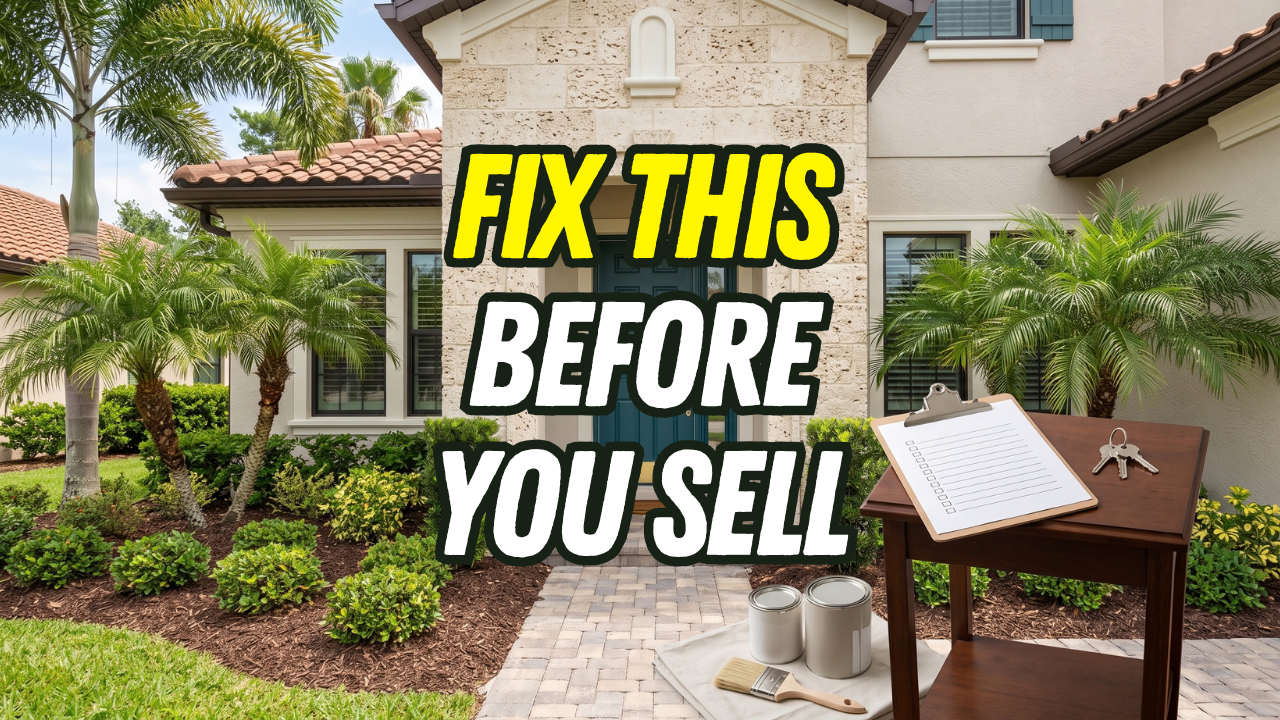
The home improvements that matter most before selling in St. Augustine are usually the ones that remove buyer objections, improve first impressions, and address condition or insurance concerns—not necessarily the most expensive renovations. Start with needed repairs, fresh paint, curb appeal, roof and major-system condition, then consider targeted kitchen or bathroom updates only when your home's condition and competing listings justify the expense.
- Take care of obvious repairs and deferred maintenance first. Problems buyers can see—or an inspector is likely to find—can overshadow cosmetic improvements.
- Freshen paint and presentation. Neutral paint, cleaning, decluttering, and small finish updates can make a property feel better maintained without a major remodel.
- Pay close attention to the roof and other major systems. In Florida, condition can affect more than appearance; it may also become part of a buyer's insurance and financing considerations.
- Improve curb appeal. Landscaping, exterior cleaning, entry improvements, and a well-maintained front door can create a stronger first impression.
- Update kitchens and bathrooms selectively. Minor improvements may be more practical than a full renovation when preparing specifically for resale.
- Match the work to the property and neighborhood. A historic downtown home, beach-area property, newer subdivision home, and investment property may require very different preparation strategies.
Start With Condition Before You Start With Renovation
One of the easiest mistakes to make before selling is assuming that "improving" a home means remodeling it. Those are not always the same thing. Before choosing countertops, flooring, cabinets, or new fixtures, walk through the property from a buyer's perspective. Look for loose railings, damaged trim, water stains, dripping faucets, cracked screens, doors that do not close properly, missing caulk, deteriorated exterior surfaces, and other signs of deferred maintenance.
These details matter because buyers rarely evaluate improvements in isolation. A beautiful new backsplash does not necessarily compensate for visible wood rot outside. New flooring may not overcome questions about an aging roof. An expensive appliance package may do little if the property feels poorly maintained overall.
The goal before listing should be to reduce friction. You want a potential buyer to focus on the home's location, layout, features, and lifestyle rather than immediately building a mental repair list. That is also why a pre-listing review can be useful. The right question is not, "What can I renovate?" It is, "What issues are most likely to affect how buyers evaluate this specific home?"
Paint, Cleaning, and Curb Appeal Can Have an Outsized Effect
Some of the most practical pre-sale improvements are also among the least complicated. The National Association of REALTORS® reported in its 2025 Remodeling Impact research that painting the entire home or painting individual rooms were among the projects real estate professionals most often recommended before listing. That makes sense. Fresh paint can make rooms feel cleaner, brighter, and more consistent. It can also reduce distractions caused by heavily personalized colors or visibly worn walls.
The same principle applies outside. First impressions begin before a buyer reaches the front door. Depending on the home, worthwhile preparation may include:
- Pressure-washing appropriate exterior surfaces
- Cleaning windows and entry areas
- Trimming overgrown landscaping
- Refreshing mulch or planting beds
- Repairing damaged screens or exterior trim
- Improving exterior lighting
- Cleaning or refreshing the front door and hardware
- Removing unused furniture, equipment, or clutter from outdoor spaces
National remodeling research also shows why small exterior projects deserve attention. NAR's 2025 report estimated strong cost recovery for front-door replacements, including 100% for a steel front door and 80% for a fiberglass replacement. Those are national estimates rather than guarantees for an individual St. Augustine property, but they reinforce an important point: bigger projects do not automatically produce better resale economics.
In other words, do not overlook the simple work while chasing the dramatic work.
In St. Augustine, Roof and Insurance-Related Improvements Deserve Special Attention
Florida sellers have another layer to consider: a buyer may evaluate a home's condition partly through the lens of homeowners insurance. The Florida Department of Financial Services notes that insurers may evaluate roof condition and may request inspections involving roofing, electrical systems, plumbing, and heating or air-conditioning equipment. Wind-mitigation features can also qualify a property owner for certain insurance credits or discounts when properly documented and accepted by the insurer.
That does not mean every St. Augustine seller should install a new roof, impact windows, or hurricane shutters before listing. It means those items should not be treated as purely cosmetic decisions. If the roof is older, damaged, leaking, or has limited remaining life, investigate it early rather than waiting for a buyer's inspection or insurance process to raise the issue. Gather permits, invoices, warranty documents, and any existing wind-mitigation information you have.
Depending on the property, you may also want to understand whether it has features such as:
- Impact-resistant windows or doors
- Approved hurricane shutters
- Roof-to-wall connections or other wind-mitigation features
- A documented roof replacement or permitted roof work
- Updated electrical or plumbing systems
- Recent HVAC equipment and service records
Documentation matters. A feature that exists but cannot be clearly verified may not provide the same practical value during a buyer's due-diligence or insurance process.
Kitchen and Bathroom Updates: Improve Strategically, Not Automatically
Kitchens and bathrooms get attention from buyers, but that does not mean every seller needs to undertake a full renovation. According to NAR's 2025 Remodeling Impact Report, estimated cost recovery was 60% for both a complete kitchen renovation and a minor kitchen upgrade, while a bathroom renovation was estimated at 50%. Those are national estimates, not promises of what a particular seller will receive. The more important lesson is that a major renovation immediately before a sale can be difficult to justify unless the existing space is significantly below what buyers expect for the home's price point and competitive set.
Before replacing everything, consider whether smaller changes solve the actual problem:
- Replacing dated cabinet hardware
- Updating a worn faucet
- Changing an outdated light fixture
- Repairing cracked grout or damaged caulk
- Touching up or repainting cabinets when appropriate
- Replacing a visibly damaged countertop or vanity only when necessary
- Improving lighting so rooms photograph and show better
- Removing excess accessories and countertop clutter
A seller's money should solve a marketability problem. If the kitchen is simply not your personal style, that is different from a kitchen with broken cabinets, damaged surfaces, poor lighting, and visibly neglected maintenance. This is where neighborhood context becomes important. A renovation appropriate for a higher-end coastal property may be unnecessary in a home where comparable listings compete primarily on price, lot, square footage, or location.
Common Misconception: Every Improvement Adds Equal Value
A renovation can improve a home without producing an equal increase in sale price. That distinction matters when you are improving specifically to sell. Personal enjoyment and resale strategy are different objectives. You might happily spend more on a custom kitchen, luxury bath, built-in entertainment system, highly personalized finishes, or elaborate outdoor feature if you plan to enjoy it for years. Immediately before selling, however, you are making the improvement for someone else.
Buyers may appreciate an upgrade without paying enough extra to reimburse the seller for the full cost. Preferences also vary. A finish you love may be something the next owner plans to change. That is why the best pre-sale improvement strategy generally focuses on broad appeal, sound condition, and removing objections rather than creating a highly personalized finished product.
Another common misconception is that the newest house always wins. It does not. Buyers compare the full package: location, condition, price, layout, lot, architecture, insurance considerations, amenities, and how the property feels relative to alternatives.
Important Considerations for Historic St. Augustine Properties
If your property is in one of St. Augustine's Historic Preservation zoning districts or has a historic designation, exterior improvements may require additional review. The City of St. Augustine states that exterior alterations within its Historic Preservation zoning districts are reviewed according to the city's Architectural Guidelines for Historic Preservation, and alterations or demolition within these districts can require Historic Architectural Review Board approval.
That makes it especially important not to assume that replacing windows, doors, exterior materials, architectural details, or other visible features is simply a matter of hiring a contractor and beginning work.
Before making a significant exterior change to a potentially historic property:
- Confirm the property's zoning and historic designation.
- Determine whether the proposed work requires city review or approval.
- Confirm permit requirements.
- Choose materials and designs appropriate to the applicable guidelines.
- Keep documentation for work that has already been completed.
For historic homes, preserving character may be part of the home's appeal. The objective should be to address condition and improve presentation without unnecessarily removing the features that make the property distinctive.
How to Decide What to Improve Before You List
Instead of starting with a renovation wish list, use a simple decision process.
- Identify condition problems.
Separate real repair issues from cosmetic preferences. - Review comparable properties.
Determine what buyers are seeing in similarly priced St. Augustine listings. - Prioritize issues that could affect a buyer's decision.
Condition, major systems, roof concerns, visible maintenance, and presentation typically deserve attention before decorative upgrades. - Estimate the actual cost.
Include labor, materials, permitting, delays, and the possibility that a project expands once work begins. - Consider your timeline.
A project that makes sense six months before listing may not make sense when you plan to sell in three weeks. - Compare the likely benefit with selling as-is.
Sometimes completing the work is worthwhile. Sometimes pricing the property appropriately and allowing the buyer to make future improvements is the cleaner strategy.
The answer can vary substantially from one property to another. A newer home with dated paint needs a different plan from an older home with an aging roof. A historic downtown property requires different thinking from a newer planned-community home. An investor preparing a rental for resale may prioritize differently from an owner who has lived in the home for twenty years.
“I highly recommend Kim Devlin. She is the best Realtor in St Augustine. She helped me navigate a home purchase and she was so great to work with. She educated me on the area, she was always transparent and honest. Her communication and keeping me updated throughout the process was amazing. Not only that, I was new to St Augustine so she was always there to recommend doctors, services, things to do, restaurants and so much more. Kim really is a true local expert.”— Amanda P.
FAQ
Should I renovate my kitchen before selling my home in St. Augustine?
Not automatically. If the kitchen is functional but dated, smaller improvements such as paint, lighting, hardware, fixtures, cleaning, or targeted repairs may make more financial sense than a complete renovation. Compare the condition of your kitchen with competing homes in your price range before committing to a major project.
Should I replace my roof before selling in St. Augustine?
A roof that is damaged, leaking, near the end of its useful life, or creating insurance concerns may deserve priority before cosmetic work. Before replacing it, confirm the roof's age and condition, review permits and documentation, obtain professional guidance, and understand how the issue may affect buyers and insurance.
What is the best low-cost improvement before selling?
Fresh neutral paint, repairs to obvious maintenance issues, deep cleaning, decluttering, improved landscaping, and a clean, attractive entry are strong places to start. They can make the home feel better maintained without committing to a major renovation.
Do historic St. Augustine homes have special renovation requirements?
Some do. Properties in the city's Historic Preservation zoning districts may be subject to architectural guidelines and review for certain exterior alterations. Confirm the property's status and applicable requirements before beginning exterior work.
Next Steps
Before spending money on renovations, find out which improvements actually make sense for your specific St. Augustine property. The right preparation depends on the home's condition, age, location, price range, architectural character, competition, and the concerns buyers are likely to have.
The Kim Devlin Team can help you walk through the property from a seller's perspective, compare it with competing homes, and identify which updates may improve marketability—and which projects may not be worth doing before you sell.
If you're considering selling a home in St. Augustine, contact the Kim Devlin Team before beginning major improvements. A property-specific plan can help you decide where to spend, where to save, and what may be better left for the next owner.
Check out this article next