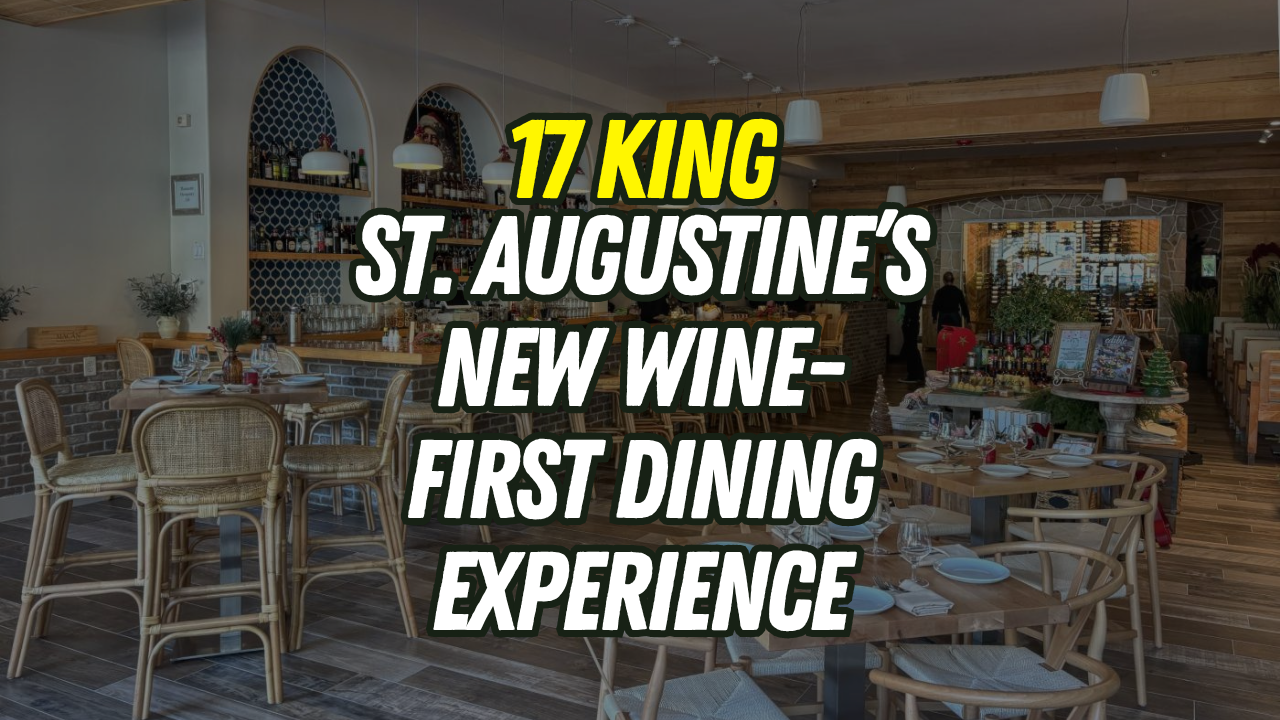
17 King is positioned as a wine-forward American bistro in downtown St. Augustine, with full-service dining, live music, and a limited retail wine component. Based on the city presentation, it is not being developed as a nightclub or bar-first concept. Instead, diners should expect a restaurant experience where food service leads and wine plays a central supporting role.
- 17 King is the new identity for The Harvest St. Augustine at 17 King St.
- The concept was described to the city as an American bistro.
- Its three main pillars are full-service dining, a wine program, and live music.
- The business received approval tied to use of a quota liquor license.
- It will include a small retail wine sales component, limited to 20% of the floor space.
- The operators emphasized that it is not intended to function as a bar or nightclub.
If you are watching restaurant activity in the St. Augustine Historic District, 17 King looks like a concept built around a more polished, experience-driven dining model rather than a late-night drinks-first venue. That distinction matters because downtown restaurant brands often live or die on clarity. When a business says it is “wine-forward,” people immediately want to know whether that means wine bar, tavern, bottle shop, or restaurant. In this case, the answer appears to be a full-service restaurant with a strong wine identity.
According to statements made during the city process, the restaurant’s leadership wanted to make that distinction very clear. The request before the city involved a use by exception connected to operating under a quota liquor license, but the business representative emphasized that the concept should not be misunderstood as a bar. Food service, by their own description, remains the governing function of the business.
For diners, that means the experience is likely being built around meals first, then atmosphere and beverage curation second. That is a meaningful positioning choice in a market like downtown St. Augustine, where a concept can easily get lumped into the nightlife category if the messaging is vague. Here, the messaging was not vague. The operators drew a firm line between a restaurant with a serious beverage program and a venue whose primary identity is alcohol sales.
What the “wine-forward” concept likely means in practice
The phrase “wine-forward” can sound abstract until you attach it to physical space and guest experience. In 17 King’s case, the concept appears to be tangible. During the public discussion, the wine element was described as something guests would understand as soon as they walked in the door, in part because of a dedicated wine room displayed within the restaurant.
That matters because it suggests the wine program is not just a menu category. It is part of the brand. For diners, that usually signals a more intentional approach to the beverage side of the experience. Instead of wine being an afterthought, it becomes one of the restaurant’s defining features.
17 King is not simply adding a few wine labels to a standard food menu. It is building a concept where wine is central to the atmosphere, visual identity, and overall guest impression. That is different from a casual restaurant that happens to serve wine, and it is also different from a pure wine bar where food is secondary.
For someone deciding whether to visit, that distinction shapes expectations in a useful way. You can reasonably expect:
- a stronger emphasis on wine presentation and selection
- a dining room atmosphere designed around a curated beverage experience
- food service that is meant to anchor the visit, not just complement drinks
- a setting that may appeal to date-night diners, visitors, and locals looking for a more refined downtown option
The addition of a limited retail wine component adds another layer. Under the lease, only 20% of the floor space may be used for retail wine sales. That reinforces that retail is a secondary feature, not the primary purpose of the business. In plain terms, 17 King is not being framed as a liquor store or bottle shop. The small retail element supports the wine identity without replacing the restaurant model.
Why does the city approval matter to diners and local observers?
City approvals can sound procedural, but they often reveal the clearest public explanation of what a business intends to be. In this case, the Planning and Zoning Board approval is important not just because it allows the concept to move forward, but because it required the operators to define the concept precisely.
That public record helps remove ambiguity. The request involved permission tied to a quota liquor license, allowing the sale of beer, wine, and spirits. On its face, that kind of approval could make some residents or nearby businesses worry that a property might tilt toward a nightlife-heavy use. The operator’s representative addressed that concern directly by stating that 17 King was not seeking to become a bar and had no ambition to become a nightclub.
For diners, this is useful information because it tells you what kind of outing to expect. If you are looking for a meal-centered restaurant with a strong wine identity and live music, 17 King appears to be heading in that direction. If you are expecting a bar scene first and restaurant second, the city discussion suggests that is not the intended model.
It also matters because this property has housed different concepts over time, including Ancient City Bourbon & Boards and Centro Restaurant and Piano Bar. When a space has seen multiple identities, diners naturally want to know whether the next concept is just a rebrand or a more meaningful repositioning. Based on the article, 17 King looks like more than a name change. The branding, wine emphasis, and operational explanation point to a clearer concept identity than a simple cosmetic refresh.
For buyers or future residents exploring the St. Augustine Historic District, these kinds of openings also help shape the perception of the area. Restaurant concepts tell people what kind of district they are moving into. A wine-forward, full-service bistro with live music contributes to a sense of walkability, local character, and layered dining options. That makes the story relevant not only to diners, but also to people evaluating the neighborhood experience more broadly.
How 17 King fits into the St. Augustine Historic District dining mix
Downtown St. Augustine is competitive. A new concept does not just need to open. It needs to justify why it belongs. The strongest signal from the 17 King approval process is that the operators understand that challenge and are trying to define the restaurant carefully before it fully launches under the new identity.
The comparison to Forgotten Tonic made during the city discussion is revealing. That reference helps frame 17 King as a place where a substantial dinner service and a notable beverage program can coexist. It suggests the team is aiming for a balanced hospitality model rather than an either-or proposition.
That balance may be what gives 17 King the best chance to stand out. In a historic downtown district, diners often want more than one thing at once. They want a place that feels distinctive, but not inaccessible. They want strong food, but also a reason to linger. They want atmosphere, but not chaos. A wine-forward American bistro with live music can sit neatly in that middle ground if execution matches the concept description.
For local residents, the appeal may be familiarity with a more polished focus. For tourists, the appeal may be discovering a restaurant that feels intentional and rooted in place rather than generic. For homebuyers researching the district, it is one more sign of how the local lifestyle is evolving. Dining options are part of how people evaluate neighborhoods, especially in historic, walkable areas where restaurants shape street life and evening activity.
It is also worth noting what the concept is not trying to be. The public comments repeatedly pushed back on the idea that 17 King should be seen as a bar, nightclub, or liquor store. That kind of message discipline usually means the operators know that identity confusion can hurt a concept before it has a chance to establish itself. By drawing those lines early, they are setting expectations in a way that helps both potential guests and the surrounding community.
So if you are asking what to expect, the answer is fairly straightforward: expect a restaurant-first concept that uses wine as a defining feature, not a side note. Expect live music as part of the atmosphere. Expect a small retail wine component, but not a store-like experience. And expect a concept that appears designed to add a more curated dining option to the St. Augustine Historic District rather than a nightlife-driven venue.
FAQ
Is 17 King in St. Augustine going to be a bar?
No. The operators told the city that 17 King is not intended to be a bar or nightclub. They described it as a full-service American bistro where food service is the primary function.
Will 17 King sell wine for retail purchase?
Yes, but only in a limited way. The lease allows up to 20% of the floor space to be used for retail wine sales, which means retail is a secondary feature rather than the core business.
What are the main features of the 17 King concept?
According to the city presentation, the three main pillars are full-service dining, a wine program, and live music. The concept also includes a dedicated wine room that reinforces its wine-forward identity.
Next steps
17 King appears set to bring a more defined wine-forward dining concept to the St. Augustine Historic District, with full-service meals, live music, and a limited retail wine element all built into the experience. If you follow restaurant openings, neighborhood change, or lifestyle developments in the area, this is the kind of concept worth watching because it says something about where downtown dining is heading.
Subscribe to our newsletter for more update on the area.
Check out this article next