

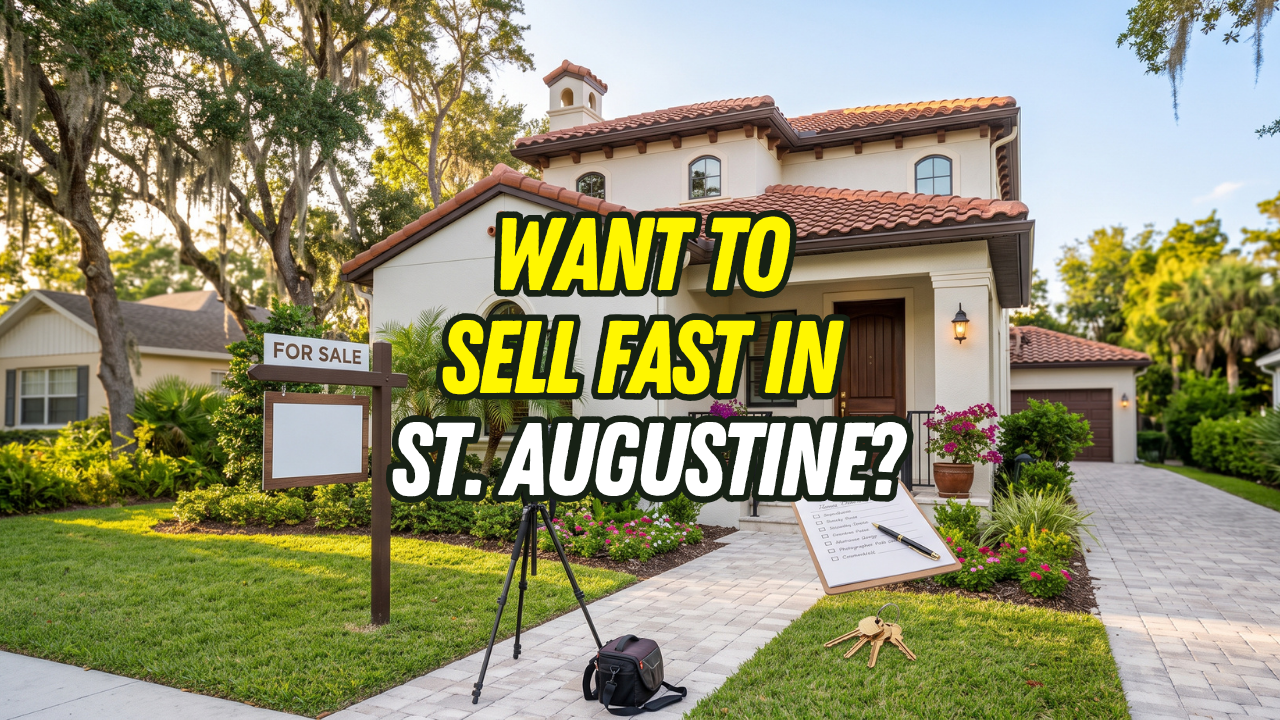
- Price for the market you are entering now, not for what a neighboring home sold for months ago.
- Prepare before listing so repairs, clutter, maintenance issues, and presentation do not create immediate objections.
- Launch with professional marketing instead of treating photography, positioning, and online presentation as an afterthought.
- Make the property easy to show during the critical opening days on the market.
- Understand your competition so buyers have a reason to choose your home instead of another St. Augustine property.
- Prepare for the transaction before receiving an offer so insurance, inspection, appraisal, title, HOA, or property-condition issues do not create unnecessary delays.
Selling Fast Starts With the Right Price, Not the Lowest Price
If your priority is speed, pricing is usually the most important decision you make before putting your St. Augustine home on the market. That does not mean automatically listing below market value. It means understanding where buyers are seeing value today.
One of the most expensive mistakes a seller can make is pricing according to what they hope to receive and planning to reduce the price later if the market disagrees. That strategy can work against a fast sale because the first days of a listing often generate the greatest attention from active buyers.
When buyers first see your property online, they immediately compare it with other homes available in similar price ranges. They are evaluating condition, location, updates, lot characteristics, square footage, neighborhood, amenities, insurance considerations, monthly costs, and overall value.
If another property appears to offer more for the same price, buyers may never schedule a showing at yours.
This matters particularly when buyers have choices. Current public market trackers illustrate why sellers should not automatically expect an immediate contract. Zillow reported St. Augustine-area homes going pending in roughly 53 to 54 days during summer 2026, while Redfin reported recently sold St. Augustine homes spending a median of approximately 91 days on the market during its three-month measurement period. The platforms use different methodologies, but neither suggests that every correctly listed property sells instantly.
Zillow also reported that a substantial majority of recent transactions in its St. Augustine dataset closed below the original list price. That is another reason an aggressive initial asking price can work against a seller whose primary goal is speed.
A stronger strategy is to study the properties competing for the same buyer and ask a simple question:
If a buyer saw my house and the three closest alternatives today, which one would appear to offer the best combination of price, condition, location, and convenience? Your list price should help make the answer your property.
Prepare the Home Before Buyers Have a Chance to Reject It
A fast sale is easier when buyers do not have to mentally create a repair list during the showing. You do not necessarily need an expensive renovation. In many cases, sellers are better served by concentrating on the visible issues that create doubt.
Start with the basics: deep cleaning, decluttering, neutralizing overly personalized spaces, improving curb appeal, replacing burned-out bulbs, correcting obvious maintenance items, touching up damaged paint, servicing systems when appropriate, and making sure doors, faucets, fixtures, appliances, and other everyday items work as expected.
Florida sellers should also think about issues that may affect more than appearance. Roof age and condition, HVAC systems, moisture concerns, electrical components, plumbing, insurance eligibility, permitting questions, and storm-related features can influence buyer confidence and, in some situations, financing or insurability. The objective is not to make an older home look brand new. It is to reduce uncertainty.
Suppose a buyer walks into two similar St. Augustine homes. One appears clean, maintained, organized, and ready for occupancy. The other has peeling exterior paint, several minor repairs, an overgrown yard, and an air-conditioning system the seller cannot provide any information about.
Even when those problems are relatively inexpensive to correct, the second property can feel riskier. Risk slows decisions. If your goal is speed, you want buyers concentrating on whether the home fits their needs—not calculating everything they may have to fix after closing.
Your First Week on the Market Matters
A property should be ready before the listing goes live—not several weeks afterward. New listings can attract buyers who have already been watching the St. Augustine market and waiting for the right property. Those buyers may have automated alerts set up and could see your home shortly after it appears online. You do not want their first impression to be temporary photos, unfinished landscaping, rooms that still need to be cleaned, or a price you already suspect is too high. Your launch should be coordinated.
That means the property is prepared, photography is complete, the listing information is accurate, the pricing strategy is established, showing procedures are clear, and the marketing is ready when the home becomes available. Professional photography is particularly important because buyers commonly encounter the home online before seeing it in person. The photographs need to communicate space, condition, features, and lifestyle accurately.
Marketing should also explain why the property deserves attention. Generic descriptions such as “beautiful home in a great neighborhood” provide very little useful information. Instead, buyers should quickly understand what distinguishes the property. That might include proximity to historic St. Augustine, beaches, major roads, shopping, outdoor recreation, community amenities, renovations, property size, architectural characteristics, or another feature genuinely relevant to that specific home. The goal is clarity, not hype.
Make It Easy for Qualified Buyers to See the Home
Every showing restriction potentially eliminates a buyer. That does not mean you need to allow unlimited access or compromise security. It means creating reasonable flexibility when possible.
A buyer visiting St. Augustine from another state may have only one weekend available. An investor may be evaluating several properties during a short trip. A local buyer may need an evening appointment because of work. If your property can only be shown during a narrow two-hour window several days later, another seller may get that buyer first.
Before listing, decide how showings will work. If you occupy the property, create a system for quickly getting it ready. Have a plan for pets, valuables, children, work-from-home schedules, and short-notice appointments. If the home is vacant, make sure access is controlled but straightforward for authorized showings. Speed comes from removing friction.
Understand What “Fast” Actually Means for Your Situation
Not every seller means the same thing when they say they want to sell quickly. You may need to relocate for work. You may already own another property. You could be managing an inherited home, rental property, vacant property, divorce, estate, investment decision, or financial deadline. Those circumstances change the strategy.
A homeowner trying to maximize equity but hoping to close within two months may choose a different approach than an investor who values certainty and wants the property sold with minimal preparation. That is why sellers should define their priorities before deciding how to sell.
Consider the relationship among three objectives:
- Price: How important is maximizing your net proceeds?
- Speed: Is there a specific date by which you need to sell?
- Convenience: How much preparation, showing activity, negotiation, and uncertainty are you willing to accept?
You can often improve one of these by giving up something in another area. A strong listing strategy tries to find the best balance rather than assuming every seller has identical priorities.
Important Considerations Before You Accept the First Offer
A fast offer is not always the same thing as a fast closing. When evaluating an offer, look beyond the headline price.
Financing terms, inspection periods, appraisal requirements, contingencies, requested concessions, closing timeline, deposit structure, and the buyer's ability to perform all affect the probability of reaching closing. For example, an offer that is slightly higher but includes several complicated contingencies may carry more execution risk than a cleaner offer at a somewhat different price.
You should also think ahead about issues that can appear after contract acceptance. Property condition, title questions, HOA or condominium documents where applicable, open permits, insurance issues, repairs, and appraisal concerns can all slow a transaction. This is another reason preparing before listing can improve speed. Problems discovered before marketing begins can often be handled calmly. The same problems discovered two weeks before closing can become emergencies.
The objective is not merely to get an offer quickly. The objective is to get from listing to a successful closing with as little unnecessary friction as possible.
“I found Kim Devlin's YouTube channel that covered everything about the St. Augustine area and it was very informative. We were looking to relocate from New York and told Kim exactly what we were looking for. Kim was very responsive and had a whole weekend itinerary set for when I was in Saint Augustine to look at homes. Next thing I know we are in contract for a new construction home... She even gave us pointers on how to get top dollar on our home sale in New York. Kim was available every step of the way and then some. Thank you again for such an easy process Kim!” — Mike C.
FAQ
What is the fastest way to sell a house in St. Augustine, Florida?
The fastest approach is generally to combine competitive pricing, strong property preparation, professional presentation, broad buyer exposure, flexible showing access, and advance preparation for inspection and transaction issues. There is no single guaranteed number of days because property type, location, condition, price range, buyer demand, and financing conditions vary.
Should I price my St. Augustine home below market value to sell quickly?
Not automatically. Your goal should be to position the home competitively against the properties buyers can choose from now. Pricing substantially below reasonable market value may sacrifice equity without guaranteeing the strongest overall result. Pricing too high, however, can reduce early activity and eventually lead to price reductions.
Do I need to renovate before selling?
Usually not. Major renovations should be evaluated based on cost, likely return, timing, and buyer expectations. If speed is the priority, correcting obvious defects, improving cleanliness and presentation, and resolving issues likely to concern buyers may produce a better result than beginning a lengthy remodel.
Can I sell my St. Augustine home as-is?
Yes. An as-is strategy can be appropriate when minimizing preparation and simplifying the process are high priorities. However, “as-is” does not eliminate the importance of pricing, disclosure obligations, presentation, buyer due diligence, or contract terms. The property's condition should be reflected realistically in the strategy.
What should I do before putting my St. Augustine home on the market?
Start by establishing your timeline and financial priorities. Then review the home's likely market position, competing listings, condition, repairs, presentation, insurance-related considerations, marketing plan, showing strategy, and potential transaction obstacles. Doing this work before the listing becomes public can help prevent delays later.
Next Steps: Build a Strategy Around Your St. Augustine Home
If selling quickly matters, the best place to start is not with a generic list price or a rushed listing. Start by understanding how your specific property compares with what buyers can purchase in St. Augustine today. The Kim Devlin Team can help you evaluate your property's likely competition, pricing position, preparation priorities, marketing approach, and potential obstacles before the home reaches the market.
That conversation can help answer the questions that matter most: What should you fix? What should you leave alone? Where should the home be positioned on price? What could slow the sale? And what strategy gives you the strongest opportunity to move from listing to closing efficiently without unnecessarily giving away value? If you're considering selling a home in St. Augustine, contact the Kim Devlin Team to build a selling plan around your property, your timeline, and your priorities.