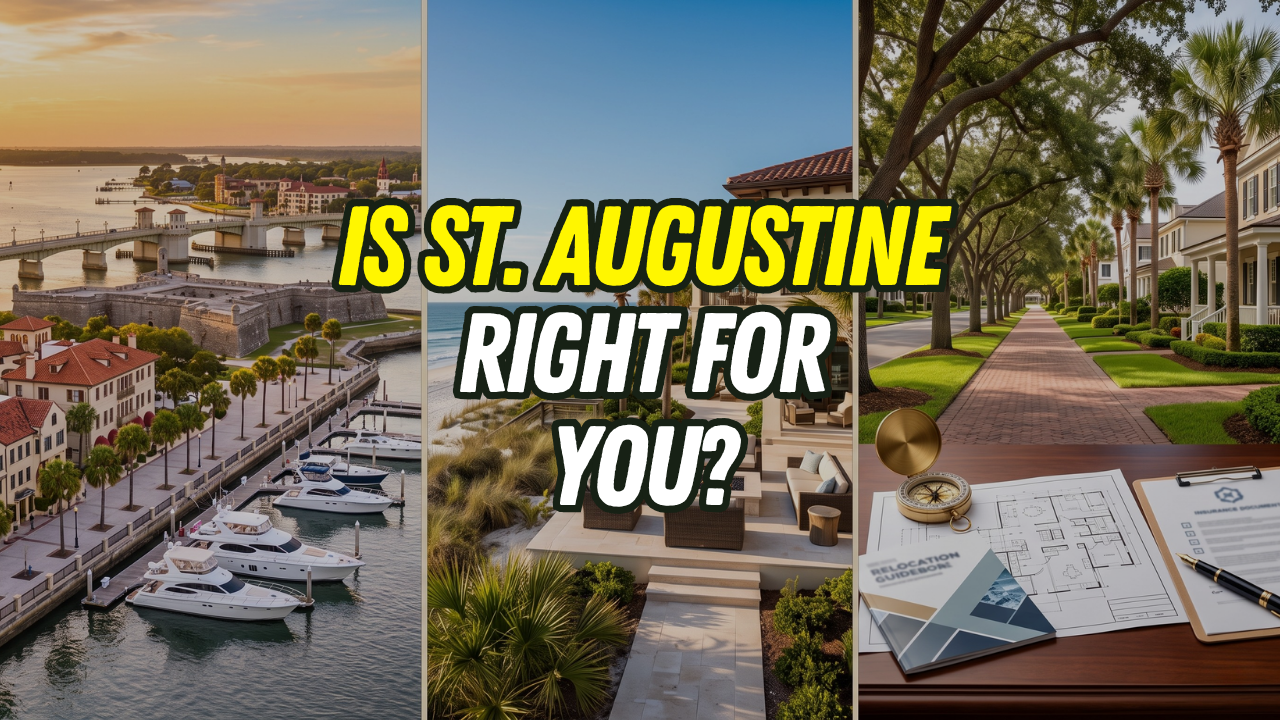
Yes, St. Augustine can be a very appealing place to live if you value historic character, coastal access, outdoor recreation, and a smaller-city atmosphere within reach of the larger Northeast Florida region. But living here also comes with tradeoffs, including housing costs, insurance considerations, flood exposure in some areas, tourist traffic, and major differences between downtown, beach, and suburban communities. The right question is not simply whether St. Augustine is a good place to live—it is whether the St. Augustine lifestyle fits your priorities and budget.
- For history and culture: St. Augustine offers a distinctive historic environment dating to its founding in 1565, along with architecture, museums, cultural sites, restaurants, and events.
- For coastal living: Anastasia Island, St. Augustine Beach, Vilano Beach, and nearby communities provide access to the Atlantic, Intracoastal Waterway, parks, boating, and outdoor recreation.
- For housing variety: The broader St. Augustine area includes historic homes, beach properties, condos, townhomes, gated communities, golf neighborhoods, established subdivisions, and newer master-planned developments.
- For cost-conscious buyers: Do not compare homes on price alone. Insurance, property taxes, HOA fees, CDD assessments, flood coverage, maintenance, and commuting can significantly change the true monthly cost.
- For people who dislike crowds: Historic Downtown and major visitor corridors can become busy during holidays, festivals, weekends, and peak tourism periods.
- For relocating buyers: Choosing the right part of St. Augustine is often more important than deciding whether you like St. Augustine generally.
What Does It Cost to Live in St. Augustine?
Housing is usually the most important number for someone considering a move to St. Augustine, but it is also where broad averages can be misleading.
According to U.S. Census Bureau estimates for 2020–2024, the median value of owner-occupied housing units within St. Augustine city proper was $439,800. Median selected monthly owner costs for households with a mortgage were $1,966, while median gross rent was $1,653. The Census also reported median household income of $78,151 in 2024 dollars.
Those numbers are useful as a demographic benchmark, but they are not current asking prices or current market medians. They are multi-year Census estimates, and they cover the incorporated city rather than every community that people commonly refer to as “St. Augustine.”
That distinction matters.
A historic home near downtown, a condo on Anastasia Island, a single-family home west of I-95, and newer construction in northern St. Johns County can have completely different purchase prices and carrying costs.
When comparing homes, calculate:
- Mortgage principal and interest
- Property taxes
- Homeowners insurance
- Flood insurance where applicable or desired
- HOA dues
- CDD assessments where applicable
- Utilities
- Expected maintenance
- Roof and major-system reserves
- Commute costs
This calculation can produce surprising results. A lower-priced property with substantial HOA fees, insurance premiums, or anticipated maintenance can cost more each month than a higher-priced home with fewer recurring expenses.
Florida Taxes Can Affect the Relocation Equation
Florida does not impose a personal state income tax on individuals. For someone relocating from a state that does levy personal income tax, that may affect the overall household budget.
That does not mean living in Florida is “tax-free.” Property taxes, sales taxes, insurance, vehicle expenses, and other costs still matter.
For homeowners in St. Johns County, real estate taxes are assessed annually. Eligible Florida homeowners may also want to investigate homestead-related exemptions and requirements through the appropriate county offices rather than assuming the prior owner's tax bill will be identical to their own.
This is particularly important when budgeting for a purchase. The taxes shown on a current listing may reflect the seller's exemptions, assessed value, or ownership history and may not represent what a new owner ultimately pays.
What Is the Culture of St. Augustine Like?
This is where St. Augustine separates itself from many Florida communities. The city was founded in 1565 and is recognized as the oldest continuously occupied settlement of European and African American origin in the United States. Its Spanish colonial history remains visible in the street pattern, architecture, Historic District, and preserved sites throughout the city. But St. Augustine's history is broader than its familiar Spanish colonial imagery.
Fort Mose represents the site of the first legally recognized free Black community in what became the United States. Lincolnville grew as an important African American community after the Civil War and later became deeply connected to the Civil Rights Movement. The Flagler era added another architectural layer through grand late-19th-century hotels and buildings that continue to influence the appearance of downtown.
Living here means that history is not confined to a museum district. It is woven into ordinary streets, buildings, neighborhoods, parks, and public spaces. The modern community adds restaurants, galleries, live entertainment, small businesses, festivals, boating, beach activities, and outdoor recreation to that historic foundation. For some residents, that blend is the primary reason to live here. For others, it comes with a tradeoff: St. Augustine is also a major visitor destination. Historic Downtown can feel dramatically different during busy weekends and large events than on a quiet weekday morning.
St. Augustine Is More Than Historic Downtown
One of the most common mistakes relocating buyers make is visiting Historic Downtown and assuming they now understand what it is like to live in St. Augustine. Downtown is only one version of the area. Your everyday experience can change dramatically depending on where you live.
Historic St. Augustine and the City District
Living near Historic Downtown can provide access to restaurants, cultural attractions, architecture, waterfront areas, and a more walkable environment than many suburban communities. The tradeoffs can include tourist activity, parking considerations, smaller lots, older housing stock, and property-specific renovation or flood concerns.
Anastasia Island and St. Augustine Beach
Cross the Bridge of Lions and daily life begins to feel different. Anastasia Island and St. Augustine Beach shift the emphasis toward coastal recreation, beach access, local restaurants, biking, boating, and outdoor living. Buyers here should pay particular attention to flood information, wind mitigation, homeowners insurance, flood insurance, maintenance, and property elevation where relevant.
North St. Augustine and Vilano
North of downtown, buyers can find established residential areas, access toward Vilano Beach, newer development in selected locations, and routes toward northern St. Johns County and Jacksonville.
West of I-95 and World Golf Village
Moving inland creates another type of St. Augustine lifestyle. These areas may include larger planned communities, newer construction, golf-oriented neighborhoods, community amenities, and convenient highway access.
Buyers should compare HOA and CDD costs carefully because master-planned communities can have very different fee structures.
Northern St. Johns County
Communities farther north can appeal to buyers who need greater access toward Jacksonville or who prefer newer suburban development. However, a St. Augustine mailing address does not necessarily mean a property feels connected to Historic St. Augustine on a daily basis.
That is why relocation decisions should be based on actual driving patterns and lifestyle needs, not simply the city name in the mailing address.
Beaches and Outdoor Recreation Are a Major Part of Daily Life
St. Augustine's relationship with the water is a major part of its identity. Residents have access to Atlantic beaches, the Intracoastal Waterway, the Matanzas River system, boating, kayaking, fishing, surfing, paddleboarding, cycling, and numerous parks and natural areas.
Anastasia State Park is one of the area's signature outdoor destinations, providing beach and natural recreation immediately beside the city. That proximity means a resident can move from Historic Downtown to a very different coastal environment within a relatively short distance.
For buyers coming from inland communities, access to water can become one of the biggest lifestyle changes after moving. It can also influence the housing decision. Decide whether you need to live beside the beach or simply want to reach it conveniently. Those are different requirements and can lead to significantly different real estate choices.
Traffic and Tourism: What Residents Should Expect
St. Augustine's popularity is both an asset and an inconvenience. Tourism supports restaurants, businesses, attractions, and cultural activity. It also means traffic and parking demand can increase substantially during major events, holidays, and high-volume visitor periods.
The City of St. Augustine has an ongoing mobility strategy focused on parking, pedestrian movement, bicycles, transit, and other alternatives to moving every visitor through downtown by private vehicle. The city also operates park-and-ride programs during some high-demand periods.
If you are considering a property close to downtown, drive your likely routes at several different times:
- A weekday morning
- Afternoon commuting hours
- A Friday evening
- A busy weekend
- During a major local event if possible
A five-mile trip can feel very different depending on where and when you make it.
Census estimates show a mean commute time of 20.1 minutes for St. Augustine city workers during 2020–2024, but that citywide figure should not be used to predict your individual commute.
Flooding and Insurance Need to Be Part of the Housing Conversation
Coastal living means water risk should be evaluated seriously. The City of St. Augustine identifies both coastal and rain-driven flooding as ongoing resilience challenges and notes that a majority of the city is located within a floodplain.
That does not mean every St. Augustine property has the same risk. Flood exposure can vary by elevation, street, drainage, proximity to waterways, structure, and even between nearby parcels.
If you are purchasing a home, review:
- Current flood-zone information
- Available elevation information
- Known flooding or water-intrusion history
- Homeowners insurance quotes
- Flood insurance options
- Roof age
- Wind-mitigation features
- Drainage around the property
- Storm shutters or impact protection
The City can provide certain flood-hazard and historical flooding information, and its flood resources direct residents toward current mapping tools.
Do this research before becoming emotionally committed to a property.
What About Schools?
If school attendance zones are relevant to your move, verify the exact property address directly with the St. Johns County School District.
The district maintains an address-based attendance-zone locator, including current 2026–2027 zoning information. Attendance boundaries can change as schools open and zones are adjusted, so a listing description or neighborhood reputation should not replace official verification.
That address-specific approach is important throughout St. Johns County because similarly named communities or nearby subdivisions may not always share identical school assignments.
What Does “Community” Feel Like in St. Augustine?
St. Augustine has an unusual combination of small-city identity and international name recognition.
The Census Bureau estimated the population of St. Augustine city proper at 16,141 in 2025, up from 14,329 at the 2020 Census.
But the lived community extends far beyond those municipal boundaries. Many people with St. Augustine addresses live in unincorporated St. Johns County or communities well outside the historic city limits.
That creates several versions of community life. You can live on a historic street where restaurants and galleries are nearby. You can choose a beach community where your routine revolves around the ocean. You can live in an established residential neighborhood with fewer shared amenities. Or you can choose a master-planned development where community pools, trails, clubhouses, and organized amenities become a larger part of daily life.
None is automatically better. The question is which version of St. Augustine matches what you actually want from your move.
Common Misconceptions About Living in St. Augustine
“Everyone lives near Historic Downtown.”
No. The broader St. Augustine housing market stretches well beyond the city center and includes beach, island, suburban, golf, and master-planned communities.
“If I have a St. Augustine address, I'll be close to downtown.”
Not necessarily. A St. Augustine mailing address can cover locations that feel quite different from the historic core.
“Florida has no state income tax, so living here is automatically inexpensive.”
Florida does not impose personal state income tax, but housing, insurance, property taxes, HOA or CDD fees, transportation, maintenance, and other costs still need to be evaluated.
“Beach living and downtown living are basically the same lifestyle.”
They are not. Housing style, transportation, parking, flood exposure, walkability, and everyday routines can differ significantly.
“I can choose an area based on online rankings.”
Rankings rarely account for your commute, budget, insurance costs, maintenance preferences, preferred housing type, or the places you actually need to reach.
Important Considerations Before Moving to St. Augustine
Before choosing a home, answer these questions:
- What is my comfortable total monthly housing cost?
- Do I want Historic Downtown, beach, island, suburban, golf-community, or master-planned living?
- How often will I need to drive to Jacksonville or another employment center?
- How important is walkability?
- How close do I actually need to be to the beach?
- Am I comfortable with an HOA?
- Does the community have a CDD assessment?
- What will homeowners insurance cost for the specific property?
- Should I carry flood insurance?
- What does the property's flood history and elevation tell me?
- How much maintenance do I want?
- If school assignment matters, what does the official district locator show for the address?
- How does traffic affect my normal driving routes?
- What restaurants, stores, healthcare providers, parks, and services will I use regularly?
Answering those questions will usually tell you much more than a generic list of St. Augustine's “best places to live.”
"Kim Devlin and the entire Kim Devlin team are the best to work with in Florida! Kim knows the area inside and out and will find you exactly what dream of! If you are interested in real estate in the St. Augustine area give her a call! You will not be disappointed!"-Rusty D,
Planning a Move to St. Augustine?
Get the local information you need before choosing a neighborhood, planning your move, or starting your home search.
FAQs
Is St. Augustine, Florida expensive to live in?
Housing can represent a significant portion of the cost of living in St. Augustine, and the amount varies considerably by property and location. Census estimates for 2020–2024 reported a median owner-occupied home value of $439,800 within St. Augustine city proper, median monthly owner costs with a mortgage of $1,966, and median gross rent of $1,653. Those figures are historical Census estimates rather than current real estate asking prices.
What is it like living in St. Augustine?
Daily life can combine historic surroundings, coastal recreation, restaurants, cultural attractions, beaches, boating, and access to the broader Northeast Florida region. Your experience depends heavily on where you live: downtown, Anastasia Island, the beach, western St. Johns County, and northern communities offer very different versions of the St. Augustine lifestyle.
What should I know before moving to St. Augustine?
Research more than home prices. Compare homeowners insurance, flood exposure and coverage, property taxes, HOA and CDD fees, commuting, tourist traffic, maintenance, neighborhood amenities, and everyday travel patterns. If school assignment matters to your household, verify the exact address using the St. Johns County School District's current attendance-zone locator.
Is St. Augustine a good place to retire?
It can be a good fit for buyers who want Florida weather, coastal recreation, history, restaurants, and a variety of housing environments. Retirement-oriented buyers should also evaluate healthcare access, insurance, maintenance, one-story versus multi-story housing, proximity to everyday services, and long-term ownership costs rather than choosing an area based on age-oriented labels.
So, Is St. Augustine Right for You?
St. Augustine offers something difficult to replicate: a genuine historic city beside the Atlantic Coast, surrounded by communities that range from beach neighborhoods and established residential streets to golf communities and newer master-planned developments.
That variety is a strength, but it also means there is no one St. Augustine lifestyle.
If you are thinking about moving here, spend less time asking whether St. Augustine is universally a “good place to live” and more time identifying the part of the area that fits how you actually want to live.
Compare the cost. Drive the neighborhoods. Visit at different times. Understand your commute. Investigate insurance and flood exposure. Look at the total monthly ownership cost. Then decide which location gives you the combination of lifestyle and practicality that matters most to you.
Next Steps
If you're considering relocating to St. Augustine, the Kim Devlin Team can help you move beyond online rankings and understand how the area's different communities compare in everyday life.
Whether you are deciding between Historic St. Augustine, Anastasia Island, the beach, World Golf Village, communities west of I-95, or other parts of St. Johns County, local guidance can help you compare housing types, commute patterns, amenities, coastal considerations, recurring ownership costs, and the practical differences between neighborhoods.
Contact the Kim Devlin Team to discuss what matters most in your move and narrow your St. Augustine search around the lifestyle, budget, and property characteristics that fit you.
Real estate, insurance, taxes, flood information, school attendance zones, HOA and CDD fees, and other property-specific information may change. Buyers should independently verify material facts with the appropriate government agencies, associations, insurance professionals, inspectors, lenders, attorneys, and other qualified professionals before making a purchase decision.
Check out this article next