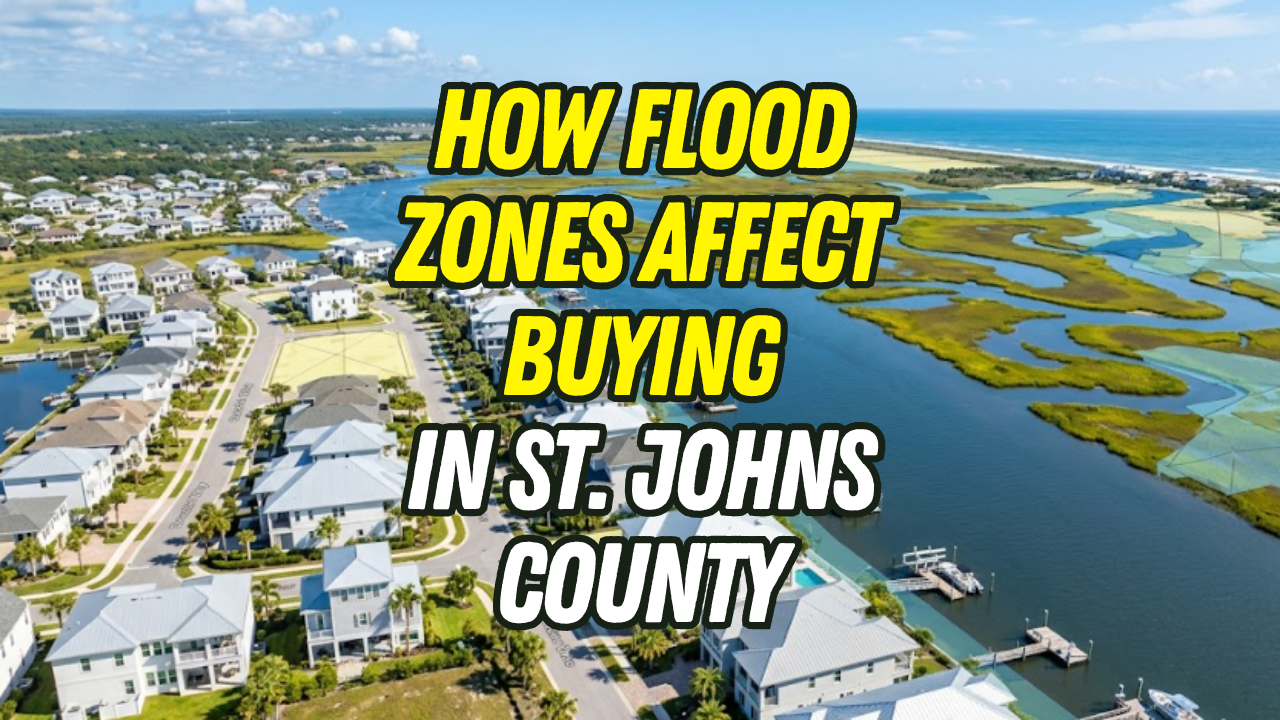
Flood zones can affect buying a home in St. Johns County, FL by influencing insurance costs, mortgage requirements, renovation rules, and long-term resale value. A home in a higher-risk flood zone is not automatically a bad purchase, but buyers should verify the property’s FEMA flood zone, request insurance quotes early, review elevation information, and understand the total cost of ownership before making a final decision.
- Flood zones may determine whether a lender requires flood insurance.
- Flood insurance is usually separate from standard homeowners insurance.
- Higher-risk zones can affect monthly affordability, resale appeal, and renovation planning.
- St. Johns County properties near the coast, rivers, marshes, low-lying areas, and drainage-sensitive neighborhoods may require closer review.
- Buyers should check FEMA maps, county floodplain resources, elevation certificates, and insurance quotes before removing contingencies.
What Is a Flood Zone in St. Johns County, FL?
A flood zone is a mapped area used to identify a property’s level of flood risk. In St. Johns County, this matters because the county includes coastal areas, inland waterways, marshland, tidal influence, and neighborhoods where drainage and elevation can vary from one street to the next.
FEMA’s Flood Map Service Center is the official public source for flood hazard information produced for the National Flood Insurance Program. Buyers can search an address, review the mapped flood zone, and download flood map information for a specific property.
Common higher-risk flood zones include A, AE, AH, AO, and VE. St. Johns County states that local Land Development Code and Florida Building Code regulations apply to development that is wholly or partially within Special Flood Hazard Areas, including those zones.
The key point is simple: a flood zone is not just a map label. It can affect the cost of ownership, the type of insurance needed, the way improvements are handled, and how future buyers evaluate the property.
Is Flood Insurance Required When Buying a Home?
Flood insurance may be required when a home is in a high-risk flood area and the buyer is using a mortgage. Lenders care about flood risk because the property is collateral for the loan. If the home is located in a Special Flood Hazard Area, the lender may require a flood insurance policy before closing.
Even when flood insurance is not required, buyers should not assume they are protected. The Florida Office of Insurance Regulation explains that flood coverage is not typically included in a homeowners policy and must usually be purchased separately.
This is one of the biggest mistakes buyers make. They focus on the purchase price, property taxes, HOA dues, and standard homeowners insurance, but they do not price flood insurance until late in the transaction. In St. Johns County, that can create problems if the quote is higher than expected or if the coverage requirement changes the buyer’s monthly payment.
A smart buyer asks for flood insurance quotes early. This should happen before the inspection period ends, not a few days before closing. That gives the buyer enough time to evaluate affordability, compare options, and decide whether the property still makes financial sense.
Do Flood Zones Affect Mortgage Approval?
Flood zones can affect mortgage approval because lenders may require proof of acceptable flood insurance before the loan can close. The flood zone itself does not automatically prevent financing, but unresolved insurance issues can delay or disrupt a transaction.
For example, a buyer may qualify for the loan based on income, credit, and debt-to-income ratio. But if the property requires flood insurance and the premium is significant, that cost may affect the buyer’s total monthly housing expense. In some cases, that can influence final loan approval or affordability.
Flood-zone issues can also show up during underwriting. If the lender’s flood determination identifies the home as being in a high-risk zone, the buyer may need to obtain a policy that satisfies lender requirements. The Federal Reserve’s interagency flood insurance guidance addresses requirements under federal flood insurance laws and regulations for lending institutions.
This is why flood-zone review should not be treated as a closing-week detail. Buyers should ask their lender, insurance agent, and real estate advisor to coordinate early so there are no surprises after inspections, appraisal, or loan underwriting are already underway.
How Can Buyers Check a Property’s Flood Risk Before Making an Offer?
Before making an offer in St. Johns County, buyers should review flood risk from several angles. FEMA maps are important, but they are not the only factor. Elevation, drainage, nearby water, storm history, neighborhood grading, insurance cost, and the condition of the home all matter.
Start with the FEMA Flood Map Service Center. Search the property address and review the flood zone. FEMA notes that flood maps are continually updated, so buyers should rely on current map information instead of old screenshots or assumptions from a prior listing.
Next, check St. Johns County floodplain resources. The county’s Floodplain Department reviews and maintains elevation certificates, issues flood zone determinations, and makes substantial improvement and substantial damage determinations.
Then ask practical questions:
- Is an elevation certificate available?
- Has the property ever had flood damage?
- What is the current flood insurance premium?
- Is the quote transferable or likely to change for a new buyer?
- Are there drainage issues on the street or lot?
- Would future improvements trigger additional floodplain requirements?
For coastal, riverfront, marsh-adjacent, or low-lying properties, this review becomes even more important. The goal is not to scare buyers away from good homes. The goal is to understand the risk clearly before committing.
How Do Flood Zones Affect Total Cost of Ownership?
Flood zones affect more than the insurance line item. They can influence the full cost of owning the home over time. That includes monthly payments, deductibles, maintenance planning, renovation limits, resale confidence, and the buyer pool when it is time to sell.
For a primary residence, the most immediate issue is monthly affordability. A buyer may be comfortable with the mortgage payment until flood insurance is added. If the home also has HOA dues, CDD fees, or higher property taxes, the total payment can change quickly.
For homeowners, flood zones can matter when planning renovations. St. Johns County explains that floodplain development permit requirements apply to development within Special Flood Hazard Areas, including new construction, substantial improvements, and repairs to substantially damaged buildings.
For investors, flood zones affect risk and return. A rental property with higher carrying costs may need stronger rental income to justify the purchase. Investors should also evaluate downtime risk, repair exposure, tenant expectations, and future resale demand.
A flood zone does not automatically make a property a poor investment. Some of the most desirable areas in Florida carry some level of flood consideration. The difference is whether the buyer understands the risk, prices it correctly, and has a plan.
What Do Buyers Often Misunderstand About Flood Zones?
The first misconception is that only waterfront homes need flood insurance. That is not true. Flooding can happen from storm surge, heavy rain, poor drainage, overflowing waterways, or low elevation. A property does not have to sit directly on the ocean or Intracoastal Waterway to deserve flood-risk review.
The second misconception is that a lower-risk flood zone means no risk. FEMA itself notes that even outside high-risk zones, flood insurance may still be needed because many homeowners insurance policies do not cover flood damage.
The third misconception is that the listing description tells the whole story. Listing data may be incomplete, outdated, or based on prior assumptions. Buyers should verify the property’s flood zone through official resources and request current insurance information.
The fourth misconception is that flood insurance is only a lender issue. Cash buyers may not be required by a lender to carry flood insurance, but that does not remove the financial risk. If the home floods and there is no separate flood policy, the owner may be responsible for the damage out of pocket.
What Should Buyers, Homeowners, and Investors Consider Before Closing?
Before closing on a home in St. Johns County, buyers should make flood-zone review part of the normal due diligence process. It should sit beside inspections, title review, insurance quotes, HOA review, and financing approval.
For buyers, the key question is: “Can I comfortably afford this home after flood insurance and risk are included?” That means reviewing quotes, deductibles, coverage limits, and lender requirements.
For homeowners, the key question is: “How does my flood zone affect future improvements?” If the home is in a Special Flood Hazard Area, renovation planning may need to account for floodplain rules, permitting, elevation standards, or substantial improvement thresholds.
For investors, the key question is: “Does the property still perform after insurance, maintenance, vacancy, and risk are properly priced?” A property may still be attractive, but only if the numbers reflect the true cost of ownership.
The best approach is not fear-based. It is fact-based. A buyer who understands flood zones can compare homes more intelligently, negotiate with better information, and avoid surprises after closing.
“We are new to the St. Augustine Area. Reading an article on the internet about this area written by Kim Devlin caused us to reach out to this amazing real estate team. We were introduced to Kristin Pytel in December of 2025. After discussing our wants and desires, we were guided to a new neighborhood where we signed a contract on a new build where we could park our large RV in the garage connected to our home. Kristen has met with and attended both in person and phone calls with our builders along with us every step of the way. She’s met us at key dates during the building process and has guided us every step of the way. Her expertise in all things St. Augustine, along with being an experienced realtor, has allowed us to sleep nights during this long process. We’ve purchased 6 homes, none in Florida, so having someone that knows the real estate laws and practices, and is from this area, well, Kristin is priceless. We’re fortunate that we found her early on. If looking to buy or sell, don’t hesitate to give her a call. We LOVE her!”— Debra L.
FAQ
Is flood insurance required for every home in St. Johns County?
No. Flood insurance is not required for every home. It may be required by a lender if the property is in a high-risk flood zone. Even when it is not required, buyers should still evaluate whether separate flood coverage makes sense because standard homeowners insurance usually does not cover flood damage.
Where can I check the flood zone for a specific property?
Buyers can search the property address through FEMA’s Flood Map Service Center, which is the official public source for flood hazard information under the National Flood Insurance Program. St. Johns County also provides local floodplain resources and can help residents understand flood zone and property-risk information.
Does being in a flood zone mean I should not buy the home?
No. Being in a flood zone does not automatically mean the home is a bad purchase. It means the buyer should evaluate insurance cost, elevation, drainage, lender requirements, renovation rules, and resale impact before deciding.
Can flood zones change after I buy?
Yes. FEMA states that flood maps are continually updated through multiple processes, and effective information may change or be superseded over time. Buyers should understand that flood risk and map designations can change during ownership.
What should I ask before making an offer on a home in a flood zone?
Ask for the current flood zone, available elevation certificate, prior flood history, current or estimated flood insurance premium, lender requirements, drainage concerns, and whether planned improvements could trigger floodplain development rules.
Next Steps
If you are considering buying a home in St. Johns County, flood zones should be reviewed early, not at the end of the transaction. The Kim Devlin Team can help you ask the right questions, review property-specific risk factors, coordinate with insurance and lending professionals, and compare homes with a clearer understanding of flood-zone impact.
Before you make an offer or remove contingencies, contact the Kim Devlin Team for guidance on buying confidently in St. Johns County’s coastal, inland, and flood-sensitive areas.
Check out this article next