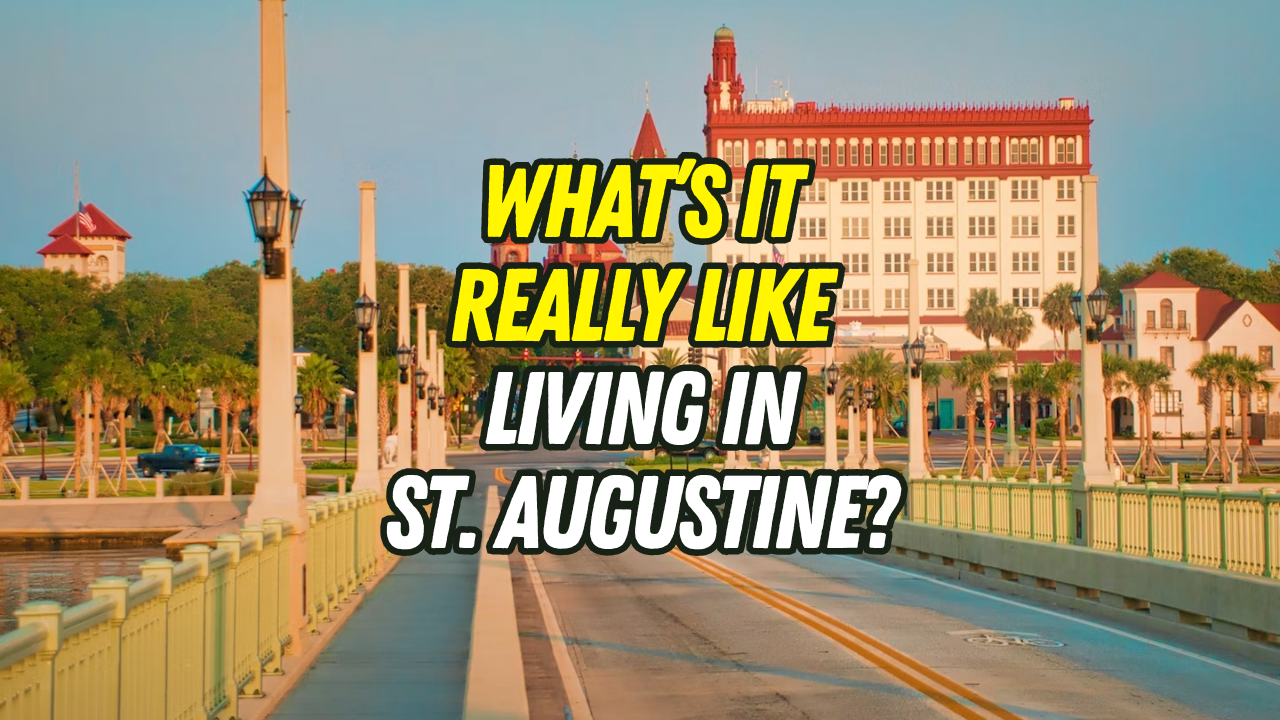
Living in St. Augustine gives you a combination that is difficult to duplicate: Atlantic beaches, historic neighborhoods, newer master-planned communities, outdoor recreation and a genuine year-round town beyond the tourist district. But choosing St. Augustine also means thinking carefully about traffic, tourism, flood exposure, insurance costs and exactly which part of the area fits your day-to-day lifestyle.
- You can live near history, the beach or newer suburban development. St. Augustine is not one uniform housing market or lifestyle.
- The coastal lifestyle is real. Beaches, boating, fishing, walking, biking and outdoor dining can become part of everyday life instead of vacation activities.
- Tourism is part of the equation. Downtown can get busy, especially around major events, weekends and holidays.
- Location matters tremendously. A few miles can change your commute, school zoning, flood exposure, housing style and access to the beach.
- Florida ownership costs deserve attention. Insurance, flood risk, property taxes, HOA fees and possible CDD assessments should be reviewed property by property.
- The best way to evaluate St. Augustine is by lifestyle first, house second. Decide how you want to live before deciding where you want to buy.
St. Augustine Is Much More Than the Historic District
When people first picture St. Augustine, they often see the postcard version: historic buildings, cobblestone-style streets, the bayfront, horse-drawn carriages and visitors walking through downtown. That is certainly part of St. Augustine, but it is not an accurate picture of everyday life for everyone who has a St. Augustine address. Depending on where you choose to live, your version of St. Augustine might involve walking or biking toward downtown. It might mean living closer to Anastasia Island and spending mornings near the beach. Or it could mean living farther west in a newer community where your daily routine looks much more suburban. That distinction is one of the most important things for a relocating buyer to understand. You are not simply deciding whether you like St. Augustine. You are deciding which version of St. Augustine fits you.
Someone who wants restaurants, architecture and historic character may make a very different choice from someone who wants newer construction, community amenities and more predictable suburban convenience. Likewise, someone who plans to be at the beach several times a week may care much more about bridge access and drive time than someone whose daily commute takes them north or west.
Before touring houses, think through what you actually want your Tuesday morning to look like—not what you want your vacation weekend to look like. That question tends to lead buyers toward better long-term decisions.
The Coastal Lifestyle Is One of St. Augustine’s Biggest Advantages
If being near the water matters to you, St. Augustine gives you several ways to build that into your lifestyle. The Atlantic Ocean is an obvious attraction, but coastal living here is about more than sitting on the beach. Depending on where you live and what you enjoy, weekends can include fishing, paddleboarding, boating, surfing, walking along the water, visiting parks, riding bikes or simply having dinner near the coast.
That access changes the rhythm of living here. For some homeowners, going to the beach becomes something they do for an hour after work rather than something that requires planning an entire vacation. Other residents rarely visit the sand but still enjoy the coastal atmosphere, weather and access to waterways.
However, "close to the beach" needs context when you are shopping for a home. A property that looks close on a map may still require crossing a bridge, navigating seasonal traffic or taking a route that gets congested at certain times. Conversely, a neighborhood that appears farther inland may give you easier access to work, shopping and I-95 while still keeping the coast within reasonable reach.
This is why mileage alone is a poor way to compare homes in St. Augustine. Drive the routes you expect to use. Visit neighborhoods at different times of day. If beach access matters, test it yourself instead of relying on a listing description that says "minutes from the beach." The goal is not simply to buy near something attractive. It is to make sure the location supports the way you actually expect to live.
Historic Charm Comes With Real-World Tradeoffs
One of St. Augustine's strongest qualities is that it does not feel like a city created yesterday. Historic architecture, mature neighborhoods, local businesses and streets built long before modern suburban planning give parts of the city a character buyers often find difficult to replicate elsewhere in Florida.
But charm and convenience do not always arrive in the same package. Downtown streets were created centuries before today's traffic patterns. Parking in and around the historic core can be limited, and major events or heavy visitor periods can noticeably change how easily you move through the area.
If you are considering a downtown or near-downtown property, ask practical questions in addition to aesthetic ones:
- Where will you and your guests park?
- How busy does the street become on weekends?
- What happens during major festivals and seasonal events?
- Can you comfortably walk to the places you want to reach?
- Does the home have the storage, layout and parking that your household needs?
- Are there historic-district or renovation considerations that could affect future plans?
Some buyers will gladly accept those tradeoffs because being close to downtown is exactly why they are moving here. Others will discover that they would rather visit the historic district when they choose and live somewhere quieter the rest of the week. Neither choice is better. They are simply different lifestyles.
Families Should Look Beyond a School District's Reputation
St. Johns County schools are an important reason many relocating households investigate the area. The district currently reports an A district grade and describes itself as Florida's No. 1 ranked school district. For a home buyer, however, the district's overall reputation should be the beginning of the research—not the end. Your specific address can determine your zoned school, and school boundaries can change as the area grows and new schools open. The district instructs families to use its Attendance Zone Locator to identify the appropriate school for a particular address.
That makes school research a property-specific task. If school assignment matters to your purchase, verify the current zoning directly with the St. Johns County School District before making a decision. Do not depend solely on an MLS entry, third-party real estate portal or what was true when a neighbor purchased several years ago.
Also consider the daily logistics. School start times, after-school activities, commute routes and proximity to childcare may matter almost as much as the school name itself. A neighborhood that looks ideal online can feel very different once you test the morning drive.
Flooding and Insurance Need to Be Part of the Home Search
This is one of the most important realities to understand when moving to St. Augustine. The City of St. Augustine specifically identifies coastal and rain-driven flooding as ongoing challenges and notes that a majority of the city is located within a floodplain. The city continues to invest in stormwater, shoreline and flood-mitigation projects. That does not mean every St. Augustine home carries the same level of risk.
It means you should evaluate risk at the individual-property level. Two homes only a short distance apart can differ in elevation, drainage, flood-zone designation, construction characteristics and insurance implications.
Before purchasing, consider reviewing:
- The property's current FEMA flood-zone information
- Available elevation certificates
- Past flooding or water-intrusion history
- Current homeowners-insurance quotes
- Whether separate flood insurance is required or advisable
- Roof age and major-system condition
- The applicable hurricane evacuation zone and route
- Any mitigation features already installed on the property
Get insurance estimates during the buying process instead of assuming your premium will resemble the seller's current cost or what you paid in another state. This is especially important in Florida because insurance can materially affect the monthly cost of owning a home. A lower purchase price does not automatically mean a lower overall housing cost. Comparing properties using the complete ownership picture gives you a much better basis for making a decision.
Common Misconceptions About Living in St. Augustine
One misconception is that living in St. Augustine means living in the middle of tourists every day. That depends heavily on where you live. Historic downtown experiences the most visible visitor activity, while many residential communities have a completely different feel. Another misconception is that every St. Augustine address puts you close enough to casually walk to downtown or the beach. The broader area is much larger and more varied than many relocating buyers expect. A third misconception is that "Florida living" automatically means maintenance-free living. Coastal climate, intense sun, heavy rain, humidity, salt exposure in certain areas and tropical weather can all influence home maintenance. That makes the age and condition of major components—especially the roof, HVAC system, windows, exterior materials and drainage—important parts of evaluating a property.
Finally, don't assume every newer neighborhood works financially the same way. Some communities may have HOA dues, CDD assessments or both. Others may have different amenity packages and restrictions. Read the documents and compare total ownership costs rather than evaluating communities solely by their base home prices.
Important Considerations Before You Decide Where to Live
The most effective way to relocate to St. Augustine is to reverse the traditional home-search process. Instead of beginning with bedrooms, square footage and finishes, begin with your lifestyle.
Ask yourself where you expect to spend most of your time. If you work outside the home, test the commute. If you're remote, think about internet needs, workspace and what you want nearby during the day. If the beach is the reason you're moving, determine how often you realistically expect to use it. If historic downtown is the attraction, decide whether you want to live within it or simply have convenient access to it.
Then compare neighborhoods using the factors that will affect you every week:
- Commute and road access
- Distance to groceries and everyday services
- Beach and water access
- Downtown access
- Home age and maintenance requirements
- Flood and storm exposure
- Insurance estimates
- HOA and CDD costs
- School zoning where applicable
- Noise, traffic and tourist activity
Then start comparing homes. This approach may eliminate neighborhoods you originally thought you wanted—and introduce you to areas you had not considered. That is often a good thing. A successful relocation is not about buying the most impressive house you saw online. It is about choosing a home that makes sense once real life begins.
“Kim is the best in the business. I’ve had the pleasure of working with Kim on several real estate transactions through the years. Whether buying or selling, she is the person you want representing you. She is very knowledgeable, an extremely hard worker and always available to answer questions. No matter the issues that may arise, she handles them diligently and makes the process drama free for her clients.”— Kelley P.
FAQ
Is St. Augustine, Florida a good place to live?
St. Augustine can be a strong fit if you value coastal access, historic character, outdoor recreation and a smaller-city atmosphere while still wanting access to a larger Northeast Florida region. Whether it is right for you depends on your preferred neighborhood, commute, housing budget and tolerance for tourism, storms and coastal ownership considerations.
What should I know before buying a home in St. Augustine?
Research more than the house itself. Review the property's flood exposure, insurance estimates, evacuation zone, property taxes, HOA or CDD obligations, school zoning if applicable and the routes you will use for work, shopping, downtown and the beach. These factors can vary substantially from one part of St. Augustine to another.
Does St. Augustine have flooding risk?
Yes. Coastal, tidal and rain-driven flooding are legitimate considerations in portions of St. Augustine. Risk varies by individual property, so buyers should review current flood information, elevation data and insurance options instead of making assumptions based only on the neighborhood name.
Is St. Augustine crowded with tourists?
Historic downtown and major attractions can become busy during weekends, holidays, festivals and peak visitor periods. That does not mean every St. Augustine neighborhood feels tourist-oriented. Living a few miles away from the historic core can produce a very different day-to-day experience.
Should I visit St. Augustine before deciding where to buy?
Yes. If possible, experience the areas you are considering like a resident rather than a tourist. Drive your likely commute, visit grocery stores, test the trip to the beach, explore neighborhoods in the morning and evening and see how traffic changes on a busy weekend. Those experiences can reveal more than photographs or listing descriptions.
Thinking About Making St. Augustine Home?
St. Augustine can offer an appealing combination of coastal living, historic character, recreation and residential choices—but the experience changes considerably depending on where you choose to live. The right question is not simply, “Should I move to St. Augustine?” It is, “Where in St. Augustine will the life I want actually work?” That is where local guidance becomes valuable. If you are considering a move, the Kim Devlin Team can help you compare St. Augustine neighborhoods based on the factors that matter to you—from beach and downtown access to commute patterns, housing options, flood considerations and the practical costs of homeownership.
Instead of starting with a list of houses, start with a conversation about how you want to live. Then you can narrow the search to the homes and locations that genuinely fit. Contact the Kim Devlin Team to start exploring which part of St. Augustine may be the right fit for your move.
Check out this article next