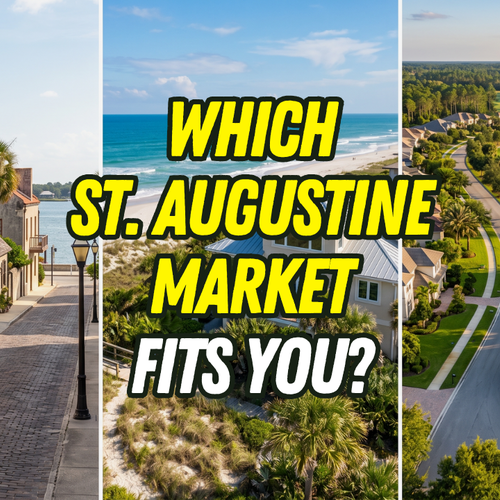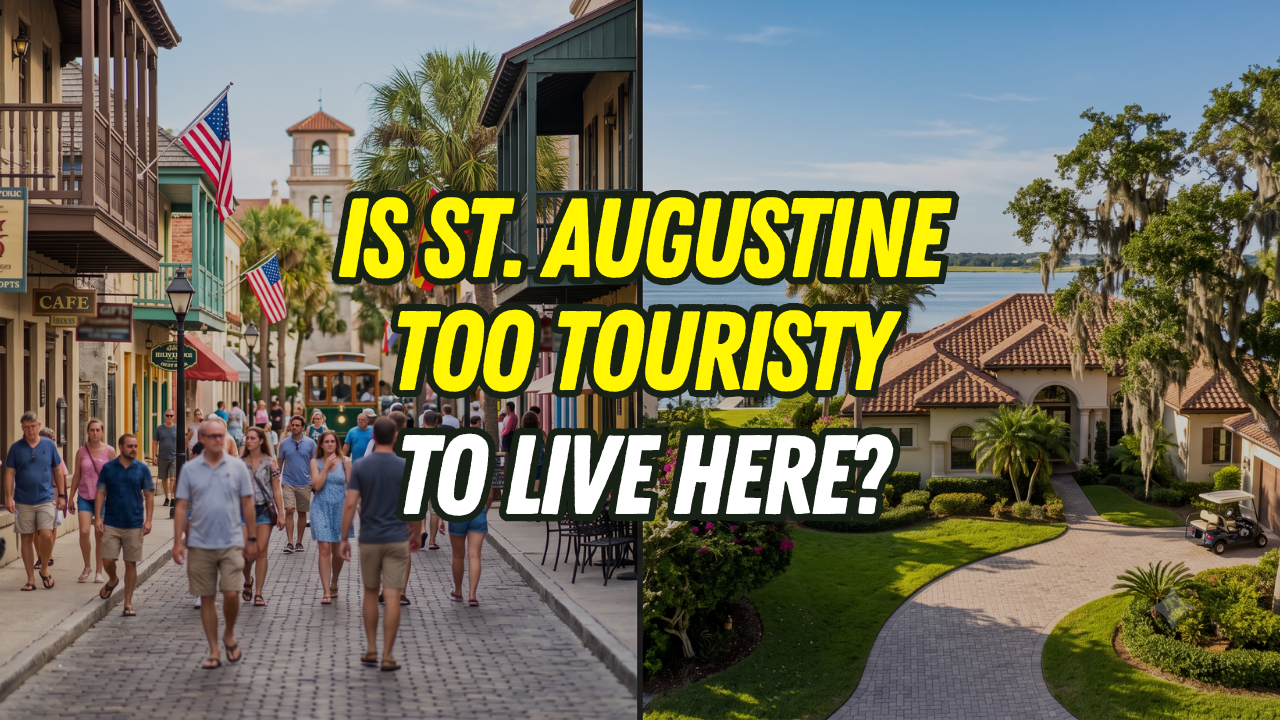
St. Augustine is not automatically too touristy for full-time living, but your experience depends heavily on where you live and how often your routine takes you through the Historic District. Residents near major attractions may regularly encounter crowds, event traffic, limited parking, and visitor activity, while neighborhoods farther from the tourism core can feel much more residential.
- Tourism is most noticeable downtown. The Historic District, bayfront, major attractions, and event areas receive the greatest concentration of visitors.
- Neighborhood choice changes the experience. Living a few miles from downtown can create a very different daily routine from living beside a major attraction.
- Busy periods are predictable. Holidays, festivals, weekends, and major local events can increase traffic and parking demand.
- Tourism also supports amenities. Residents benefit from a strong selection of restaurants, cultural attractions, live entertainment, historic sites, and community events.
- Your tolerance matters. Some residents enjoy an active destination city; others prefer a quieter neighborhood with occasional access to downtown.
- Investors need property-specific research. Rental regulations, zoning, insurance, occupancy assumptions, and neighborhood conditions should all be reviewed before purchasing.
Daily Life Depends More on Your Neighborhood Than the City’s Reputation
St. Augustine is often described through its best-known visitor experience: historic streets, the waterfront, restaurants, museums, horse-drawn carriages, festivals, and centuries-old architecture. That is an important part of the city, but it is not the complete picture of year-round life.
The City of St. Augustine covers a relatively compact area, and its historic core has narrow streets that were not designed for modern traffic volumes. The city maintains downtown parking facilities, metered spaces, resident parking options, a parking application, park-and-ride services, and a free circulator to help manage access. Those resources are useful, but their existence also reflects a practical reality: getting around downtown requires more planning during busy periods.
A home within walking distance of St. George Street, the bayfront, or a popular attraction may offer exceptional convenience and historic character. It may also place you closer to pedestrian traffic, tour vehicles, special events, restaurant activity, and visitors searching for parking.
A home outside the Historic District may provide a more conventional residential experience. Depending on the specific area, you may have easier parking, quieter evenings, newer construction, larger lots, or more direct access to schools, grocery stores, medical services, beaches, or regional roads.
This is why a broad question such as “Is St. Augustine too touristy?” is difficult to answer without discussing the property’s exact location. The better question is: “Will this neighborhood support the way I expect to live every day?”
Tourism Creates Trade-Offs, Not Just Problems
Tourism can be inconvenient, but it also helps sustain many of the features that make St. Augustine appealing. The city and surrounding area offer historic attractions, restaurants, beaches, museums, live music, art, festivals, and community events that residents can enjoy throughout the year. Local event calendars show activity in the Historic District, at the beach, and along the river, while festivals are scheduled during much of the year.
For some residents, that energy is a major benefit. You can attend a concert, explore a museum, walk along the bayfront, meet friends downtown, or enjoy a restaurant scene that is larger than you might expect from a comparatively small city.
Other residents may view the same activity differently. They may not want to adjust dinner reservations around a festival, encounter sightseeing vehicles during routine trips, or think about parking before visiting businesses downtown.
The practical question is not whether tourism exists. It clearly does. The question is whether the benefits outweigh the inconveniences for your lifestyle.
A buyer who enjoys history, walkability, restaurants, events, and an active public environment may see tourism as part of the appeal. A buyer who values quiet streets, minimal traffic, predictable parking, and limited short-term visitor activity may prefer a residential area farther from the center.
When Does St. Augustine Feel the Most Crowded?
St. Augustine hosts events and celebrations throughout the year, so visitor activity is not limited to one short season. Weekends, holidays, school breaks, major festivals, and high-profile seasonal events can all create additional demand around downtown roads, parking facilities, restaurants, and attractions.
That does not mean every neighborhood feels crowded whenever an event takes place. The effects tend to be most concentrated around downtown, the bayfront, major event venues, popular beach access points, and the routes people use to reach them.
Before buying, test the location under realistic conditions:
- Drive from the property to work, school, or daily errands during the hours you would normally travel.
- Visit the neighborhood on both a weekday and a weekend.
- Check the local event calendar and return during a major event.
- Listen for evening activity, tour traffic, live music, or nearby commercial noise.
- Confirm whether the property has dedicated parking.
- Map alternate routes that avoid the Historic District.
- Ask how frequently nearby homes are used as vacation rentals.
A ten-minute visit to a listing cannot show you how the area functions at different times. A strong property evaluation should include the surrounding streets, access routes, neighboring land uses, parking conditions, and likely sources of seasonal activity.
What Full-Time Buyers Should Consider Before Choosing an Area
Tourism is only one part of a full-time housing decision. A property can be removed from visitor traffic and still be a poor fit because of commute time, insurance costs, flood exposure, maintenance needs, association restrictions, or limited access to everyday services.
Evaluate each home using a wider set of criteria:
- Daily access: How long will it take to reach groceries, healthcare, work, schools, beaches, and major roads?
- Parking: Does the home have a garage, driveway, assigned space, permit requirement, or reliance on street parking?
- Noise and activity: Are there restaurants, event spaces, attractions, bars, hotels, or vacation rentals nearby?
- Flood and storm considerations: What should you understand about the property’s elevation, flood zone, evacuation area, and insurance options?
- Property maintenance: Is the home historic, recently built, part of an association, or exposed to coastal conditions?
- Rental environment: Are surrounding homes primarily owner-occupied, long-term rentals, or short-term accommodations?
- Future resale: Will the location appeal to the type of buyer most likely to purchase the property later?
The City of St. Augustine provides resident resources covering utilities, neighborhood associations, parking permits, public updates, and other practical services. That infrastructure reinforces an important point: St. Augustine is not simply a visitor destination. It is also a functioning residential community with year-round municipal services.
Common Misconceptions About Living in St. Augustine
Misconception: The entire area feels like a tourist district.
Visitor activity is concentrated. The Historic District may feel very different from a residential street several miles away.
Misconception: Locals have to avoid downtown completely.
Residents can still enjoy downtown, particularly when they learn event schedules, parking options, alternate routes, and less crowded times.
Misconception: Tourism only creates disadvantages.
It can also support restaurants, attractions, entertainment, cultural programming, and employment.
Misconception: A quiet showing means the neighborhood is always quiet.
Conditions may change on weekends, holidays, evenings, and event dates. Multiple visits provide a more accurate picture.
Misconception: Every property near a popular area is suitable for short-term rental use.
Rental eligibility can depend on jurisdiction, zoning, registration requirements, association rules, deed restrictions, and other property-specific factors. St. Johns County has adopted regulations addressing short-term vacation rentals, including registration and operating standards in applicable unincorporated areas. Buyers should verify the current rules that apply to the exact address rather than relying on a listing description or assumption.
Important Considerations for Investors
An investor may view tourism as an opportunity, but visitor demand alone does not make a property a sound investment. The property must also work financially, legally, operationally, and geographically.
Before purchasing, review:
- The jurisdiction governing the property.
- Zoning and permitted use.
- Short-term rental registration or licensing requirements.
- Homeowners’ or condominium association restrictions.
- Minimum rental periods.
- Parking and occupancy limits.
- Insurance availability and cost.
- Flood exposure and storm-related expenses.
- Management, cleaning, maintenance, and platform fees.
- Realistic occupancy and nightly-rate assumptions.
- Seasonal income variation.
- The property’s viability as a long-term rental or resale asset.
Investors should also distinguish between the City of St. Augustine, St. Augustine Beach, and unincorporated St. Johns County. A mailing address that says “St. Augustine” does not necessarily mean that every property falls under the same local rules.
“Absolutely the best team of realtors I have ever experienced. We feel so blessed to have had them helping us. Moving in from another state, Kristen Pytel had to be my eyes, and I trusted her advice 100%. She went above and beyond for us. I will forever be grateful.”— Donna B.
FAQ
Is St. Augustine too crowded to live in full-time?
Not for everyone. Downtown can become busy during events, holidays, and popular travel periods, but many residential areas feel removed from the heaviest visitor activity. Your experience will depend on the neighborhood, your travel routes, and how frequently you use downtown.
What areas of St. Augustine feel less touristy?
Areas outside the Historic District generally receive less visitor foot traffic. Buyers may explore mainland neighborhoods, Anastasia Island, St. Augustine Beach, Vilano Beach, and other parts of greater St. Augustine. Each location has different housing, access, flood, insurance, traffic, and lifestyle considerations, so the best choice depends on the individual property and your priorities.
Does tourism make St. Augustine a bad place to invest?
No. Tourism may support demand for certain properties and local businesses, but it does not eliminate investment risk. Confirm permitted use, rental restrictions, operating expenses, insurance, expected occupancy, and alternative exit strategies before purchasing.
Should I visit St. Augustine before buying a home?
Yes. Visit more than once and experience the area under different conditions. A weekday morning, weekend evening, and major event date may reveal very different traffic, noise, parking, and neighborhood patterns.
Is St. Augustine the Right Full-Time Home for You?
St. Augustine can be an excellent place to live year-round when you choose a location that fits your routine. Its tourism is real, particularly in and around the Historic District, but it does not define every neighborhood or every resident’s daily experience.
The right decision comes from comparing specific properties rather than judging the entire market by a weekend downtown. Consider how often you will travel through tourist areas, what level of activity you enjoy, where you need to go each day, and which trade-offs you are comfortable accepting.
Check out this article next