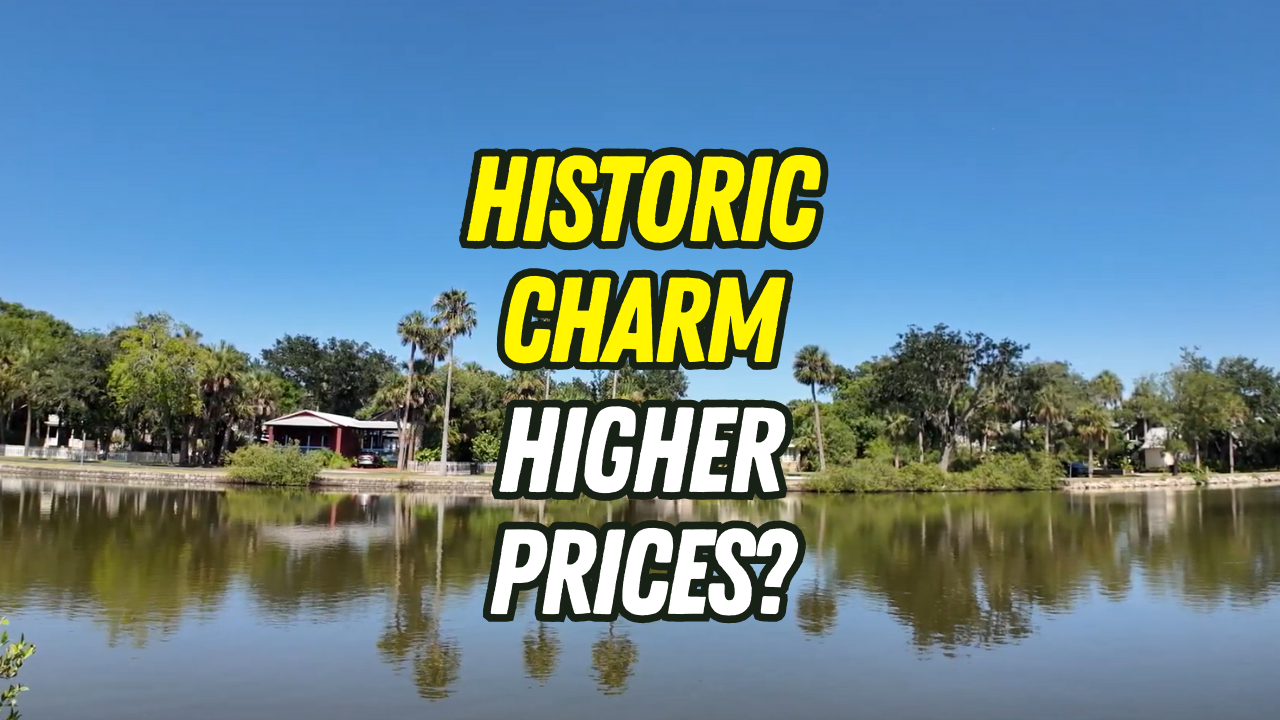
Historic homes in St. Augustine sell at a premium because they offer something modern construction cannot replicate: architectural authenticity, protected character, limited supply, and a lifestyle deeply tied to the city’s identity. Buyers are not just purchasing a house — they are buying history, location, and long-term scarcity.
What Makes Historic St. Augustine Homes Sell at a Premium?
- They are located in highly desirable, walkable historic areas
- Architectural styles and craftsmanship cannot be reproduced today
- Strict preservation rules protect long-term neighborhood character
- Limited inventory creates consistent buyer competition
- Buyers place emotional and legacy value on ownership
Historic Location Creates Built-In Demand
In St. Augustine, location is inseparable from history. Homes near the Historic District, downtown corridors, and established preservation zones consistently attract buyers who value walkability, cultural access, and architectural surroundings.
Unlike newer subdivisions that can expand outward, historic areas are geographically fixed. That permanence creates a supply ceiling. When demand rises — whether from second-home buyers, retirees, or lifestyle-driven purchasers — prices respond accordingly.
Buyers are often willing to pay more to live near historic landmarks, cafes, waterfront walkways, and centuries-old streetscapes because those amenities cannot be duplicated elsewhere in the city.
Architectural Authenticity Drives Emotional Value
Historic St. Augustine homes often feature materials and craftsmanship rarely found in modern builds: coquina stone, heart pine floors, thick masonry walls, handcrafted millwork, and original fireplaces.
These elements create an emotional response. Buyers don’t compare these homes to new construction on a price-per-square-foot basis alone. They evaluate uniqueness, character, and story — factors that consistently push perceived value higher.
For many buyers, the appeal is not efficiency or uniformity, but individuality. That emotional connection frequently translates into stronger offers and fewer price objections.
Preservation Rules Protect Long-Term Value
Historic designation often comes with architectural guidelines and renovation oversight. While this can initially feel restrictive, it plays a major role in protecting property values over time.
Preservation rules prevent incompatible development, teardown rebuilds, and aesthetic dilution of the neighborhood. Buyers gain confidence knowing the surrounding area will maintain its character — not change dramatically five years down the road.
This predictability reduces risk, which increases buyer willingness to pay a premium.
Scarcity and Competition Push Prices Higher
Historic homes are, by definition, finite. No new supply can be added that truly competes with existing historic inventory.
As St. Augustine continues to attract new residents and investors from St. Johns County and beyond, competition for well-maintained historic properties remains strong. Homes that are properly updated while preserving original features often receive multiple offers, even in slower market conditions.
This scarcity is one of the most powerful long-term pricing drivers in the historic segment.
“Absolutely loved working with Kim! I had sold and closed on my house in Washington state and needed to find something quick. She gave me great advice and steered me away from areas that I was unfamiliar with even if they looked great on Zillow. She found me a great house in an awesome neighborhood with a dream outdoor pool and patio. I still can't believe I closed on a house just over a month after arriving in St. Augustine. Thanks for making it so easy, Kim!” — Lisa R
Common Misconceptions About Historic Home Pricing
One common misconception is that historic homes are overpriced simply because they are old. In reality, age alone does not create value — preservation, location, condition, and demand do.
Another misunderstanding is that historic homes are always expensive to maintain. While some require specialized care, many have already undergone major system updates, and buyers often find the long-term value outweighs maintenance considerations.
Important Considerations for Buyers and Sellers
Buyers should understand local preservation guidelines, insurance considerations, and renovation requirements before purchasing. Sellers should recognize that proper presentation, documentation, and pricing strategy are critical when marketing historic properties.
Homes that clearly communicate their updates, compliance, and historical significance tend to command stronger offers and shorter days on market.
FAQ
Do historic homes in St. Augustine always sell for more?
Not always, but well-located and properly maintained historic homes often outperform comparable non-historic properties due to scarcity and buyer demand.
Are historic homes harder to finance or insure?
They can require additional documentation, but many buyers successfully finance and insure historic properties with the right preparation.
Does historic designation limit renovations?
Exterior changes are typically regulated, but interior updates are often more flexible depending on the designation and location.
Next Steps
If you’re considering buying, selling, or investing in a historic home in St. Augustine, understanding how history influences value is essential. Contact the Kim Devlin Team to navigate the nuances of the historic market with clarity and confidence.
Check out this article next