

OUR RELOCATION RESOURCES
Planning a move and not sure where to start? Check out our relocation resources below for helpful tips, checklists, timelines, and expert advice to make your move as smooth and stress-free as possible.
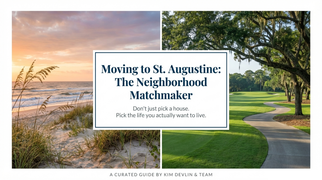

St. Augustine Pros and Cons
Discover the real pros and cons of living in St. Augustine, Florida, from summer heat and tourist traffic to the incredible perks of coastal living, historic charm, and a vibrant local culture. Explore what locals love about the nation’s oldest city in The Insider’s Guide to St. Augustine.
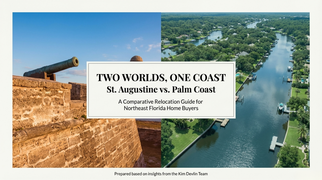
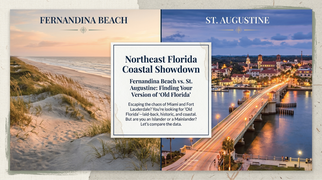
You are considered a Florida resident once you establish a permanent home, obtain a Florida driver’s license, and register to vote. For tax purposes and the Homestead Exemption, you must file a "Declaration of Domicile" with the St. Johns County Clerk of Courts. This signals your intent to make St. Augustine your permanent residence.
Florida law requires you to register your vehicle and obtain a Florida license plate within 10 days of establishing residency (starting a job, enrolling children in school, or signing a lease). You must visit the St. Johns County Tax Collector with your out-of-state title and proof of Florida insurance.
While only required by lenders in high-risk "Special Flood Hazard Areas" (Zones A or V), nearly 25% of all flood claims in Florida occur in low-to-moderate risk zones (Zone X). We recommend all St. Augustine residents carry a policy, as standard homeowners insurance does not cover rising water.
Enrollment is based on your physical address. You must provide three proofs of residency: a deed or lease, a current utility bill, and a driver’s license with the new address. Because St. Johns County is the 10th fastest-growing county in the U.S., check the St. Johns County School District zoning map for 2026-2027 attendance changes before choosing a home.
For master-planned amenities and top-rated schools, Nocatee, SilverLeaf, and Palencia are the premier choices. If you prefer a coastal lifestyle with a "small-town" feel, Anastasia Island offers proximity to R.B. Hunt Elementary and the beach.
Hurricane season runs from June 1 to November 30. New residents should sign up for Alert St. Johns, identify their evacuation zone, and ensure their home has "wind mitigation" features like hurricane clips or impact windows, which can significantly lower your insurance premiums.
Thinking About Moving to St. Augustine or Palm Coast, Florida?
Relocating to Northeast Florida is a big decision — and you deserve more than a Google search and a guess. Our free relocation guides are written by locals who know St. Augustine and Palm Coast inside and out, covering everything from the best neighborhoods and top-rated schools to flood zones, commute routes, and what no one tells you until after you've signed.
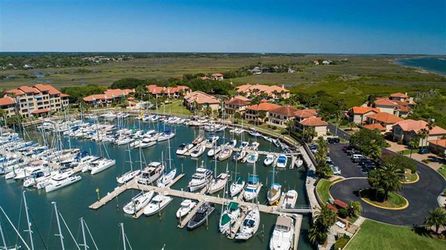
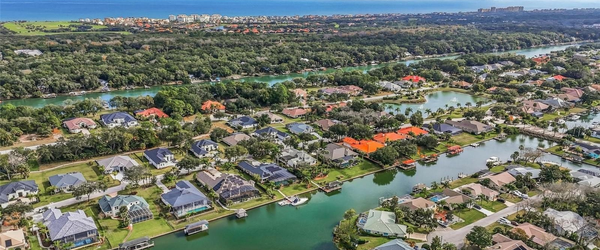
St. Augustine Relocation Guide 2026
Everything you need to know about moving to St. Augustine, FL — neighborhoods, schools, lifestyle, costs, and what to expect in your first year as a resident
Palm Coast Relocation Guide 2026
Thinking about Palm Coast as your home base in Northeast Florida? Get the local breakdown on communities, amenities, home prices, and why so many families and retirees are choosing Flagler County.