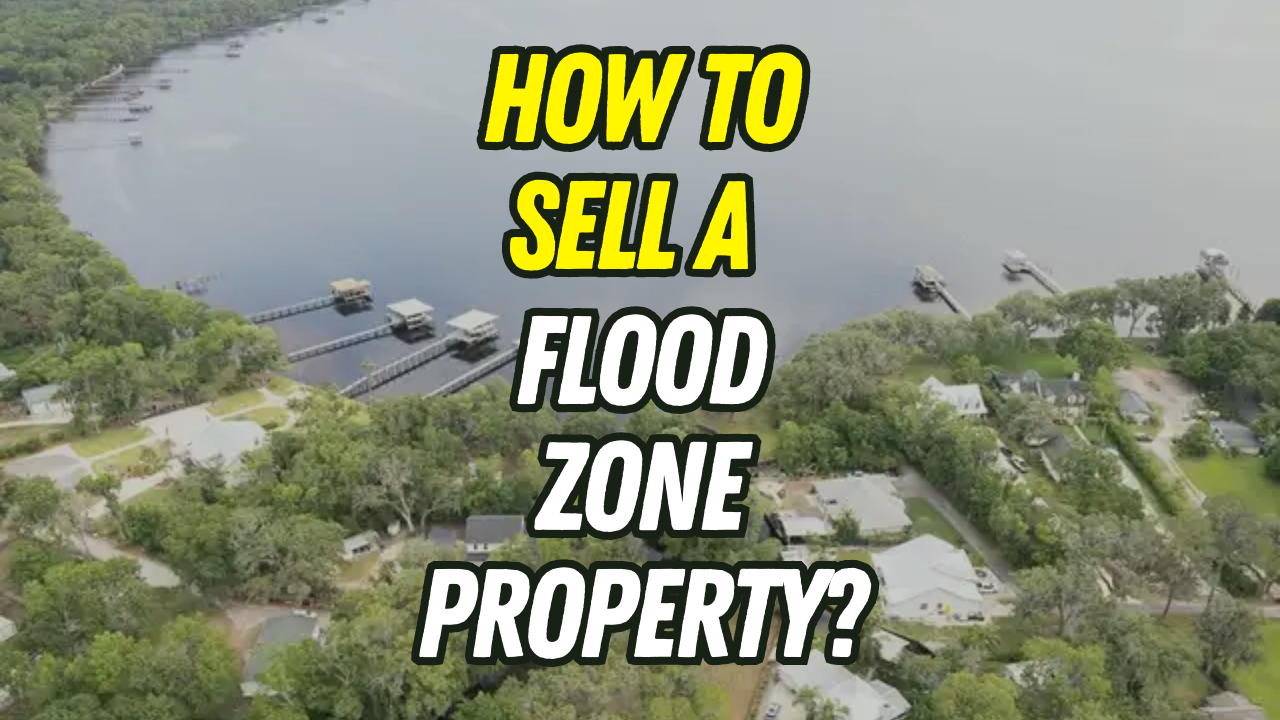
Flood zone doesn’t mean “no sale” in St. Augustine or St. Johns County. It means buyers need clarity. When you market a flood zone property with transparency, documentation, and a strategy that reduces uncertainty, you can protect value and attract serious buyers—especially in coastal and water-adjacent areas where lifestyle demand remains strong.
- Stop letting the flood zone label control the narrative—you control it with proof and positioning.
- Reduce buyer uncertainty fast with the right documents and insurance guidance.
- Price based on the market, not fear—while anticipating appraisal and financing realities.
- Market lifestyle + resilience (location, elevation, improvements) instead of hiding the topic.
- Pre-empt objections so negotiations don’t become “risk discounts.”
Most value loss doesn’t come from the flood zone itself. It comes from what buyers think the flood zone means. When buyers see “flood zone,” their minds jump to worst-case assumptions:
- “Insurance will be insane.”
- “This place floods all the time.”
- “I won’t be able to get financing.”
- “Resale will be hard later.”
- “I’ll get stuck with surprise costs.”
Your job as a seller is not to argue with these fears. Your job is to replace fear with clarity. The faster you do that, the less leverage a buyer has to demand a “risk discount.” And in St. Augustine + St. Johns County—where coastal proximity and lifestyle appeal remain major drivers—buyers will still pay strong prices for the right property when the risk feels understandable and manageable.
What does it actually take to sell a flood zone home without giving away value?
If you want to protect value, you need a strategy that does three things:
- Controls the narrative (you address the topic first, not the buyer’s imagination)
- Proves what’s true (documentation beats opinion)
- Shows a plan (buyers want to know what ownership looks like)
1) How should you talk about a flood zone when listing your home in St. Augustine?
The fastest way to lose buyer trust is to dodge the flood zone conversation. Buyers will find out anyway—through disclosures, mapping tools, insurance conversations, or lender requirements. Instead, position it like a professional:
- Acknowledge the flood zone classification.
- Explain what documentation is available.
- Clarify what’s known (and what isn’t) without speculating.
This approach does something powerful: it tells buyers you’re not trying to “sell them.” You’re trying to inform them. That raises confidence—and confidence preserves price.
2) What documents and proof help a flood zone home sell without a discount?
In flood zone listings, buyers don’t need hype. They need evidence. The goal is to replace “What if?” with “Here’s what we know.” Examples of proof that helps:
- Elevation Certificate (if available)
- Insurance quote scenarios (not a promise—just realistic ranges from providers the buyer can verify)
- Mitigation improvements (roof updates, openings protection, drainage work, grading, sump systems where applicable)
- Permits and documentation for relevant work
- Claim history clarity if there has been a prior claim (buyers fear hidden stories)
Important: you don’t need to “solve” everything. You need to remove mystery. Mystery is what causes buyers to demand discounts.
3) How do you market a flood zone property's lifestyle and location without hiding the risk?
In coastal Florida, many buyers accept that water proximity comes with tradeoffs. The difference is whether they believe the tradeoffs are manageable. Strong positioning focuses on:
- location benefits (proximity to beaches, historic areas, boating lifestyle, walkability where applicable)
- construction/resilience features (elevation, drainage, updated systems)
- ownership clarity (insurance guidance, maintenance realities)
This is especially important for waterfront and luxury properties. Many buyers are still willing to pay premiums for lifestyle—if the risk is clearly communicated and supported with documentation.
What beliefs about flood zone homes actually cost sellers the most money?
- “Flood zone means I have to slash my price.” Not necessarily. Poor positioning and uncertainty cause bigger concessions than the classification itself.
- “Buyers will figure it out.” They will—but usually in the least favorable way (fear-based assumptions).
- “Insurance is the same for every home in the zone.” Costs can vary widely depending on elevation, mitigation, and structure details.
- “If I mention it, I’ll scare buyers off.” Transparency often does the opposite: it attracts serious buyers and filters out fear-driven shoppers.
Important Considerations Before You List (So You Don’t Lose Value in Negotiation)
1) Pricing: How do you price a flood zone home in St. Augustine without leaving money on the table?
Pricing should reflect comparable sales, condition, updates, and demand—not fear. However, flood zone listings require you to anticipate:
- how appraisers may interpret comps
- how buyers will compare your home to non-flood-zone options
- how insurance perceptions affect urgency
Strategically, you’re aiming for a price that is defensible and supported by a clean narrative.
2) Pre-Listing Prep: What should you fix before listing a flood zone property in St. Augustine?
You don’t need a full renovation to reduce risk perception. But you should address obvious issues that make buyers feel exposed:
- drainage and grading problems
- signs of moisture intrusion
- deferred exterior maintenance
- roof age concerns (especially if buyers fear insurance friction)
In flood zone sales, small fixes often prevent big negotiation hits.
3) Marketing: How do you market a flood zone home so buyers feel confident saying yes?
The best marketing for a flood zone property doesn’t bury the topic. It makes the buyer think: “This is handled. This is clear. This doesn’t feel risky.” That means your listing and agent strategy should proactively address:
- what the flood classification is
- what documentation exists
- what improvements have been made
- what the buyer should verify (insurance, lender, etc.)
FAQs
What flood zones exist in St. Augustine and St. Johns County?
St. Augustine and St. Johns County include several FEMA flood zone designations, and the zone your property falls in significantly affects insurance requirements and buyer perception. Zone AE is the most common high-risk designation in coastal and low-lying areas — it requires flood insurance for federally backed mortgages. Zone AH indicates shallow flooding risk. Zone X is the most favorable, covering areas considered moderate to minimal risk where flood insurance is optional but still recommended. Zone VE applies to coastal areas with wave action and carries the highest insurance requirements.
Can you sell a house in a flood zone in St. Augustine without discounting it?
Yes. Many flood zone properties sell at strong values when they’re positioned correctly. The key is transparency, proof (elevation/mitigation documentation), accurate insurance guidance, and marketing that frames flood zones as manageable—not mysterious.
What documents help a flood zone home sell faster?
An elevation certificate (if available), insurance quote scenarios, records of mitigation work, permit documentation, and clarity on claim history (if applicable) can reduce buyer uncertainty and speed up decision-making. Do flood zones automatically mean high flood insurance? Not automatically. Insurance costs vary widely based on elevation, mitigation features, structure details, and coverage choices. Two homes in the same flood zone can have very different premiums.
Does a flood zone designation affect financing or mortgage approval in St. Augustine?
Yes — flood zone designation directly affects the mortgage process. Homes in high-risk zones like AE or VE require flood insurance as a condition of any federally backed loan, including FHA, VA, and conventional Fannie Mae or Freddie Mac mortgages. This isn't a dealbreaker, but it is a cost buyers need to factor in. As a seller, providing insurance quote scenarios upfront — so buyers can see realistic annual costs before making an offer — removes one of the biggest sources of last-minute negotiation pressure. Buyers who feel financially surprised late in the process either renegotiate hard or walk away.
“Kim Devlin was amazingly patient with us and our long list of wants or don't wants with a very large search area! Once we finally found the home we were looking for the whole process was quick, painless and surprisingly easy. No hesitation in recommending Kim Devlin, thank you.” — Lisa P.
Next Steps
Flood zone properties in St. Augustine and St. Johns County sell everyday, and many of them sell well. The difference between a strong sale and a discounted one usually comes down to how uncertainty is handled upfront and whether your agent understands the local market well enough to anticipate buyer questions before they become negotiation leverage.In Northeast Florida, flood zone conversations are common. Sellers who prepare for them in advance protect their price. Sellers who don't often find themselves negotiating from a weaker position late in the process.
If you're preparing to sell a flood zone property in St. Augustine or St. Johns County and want a strategy that protects value from day one, contact Kim Devlin Team for guidance tailored to your property and flood zone situation.
Check out this article next