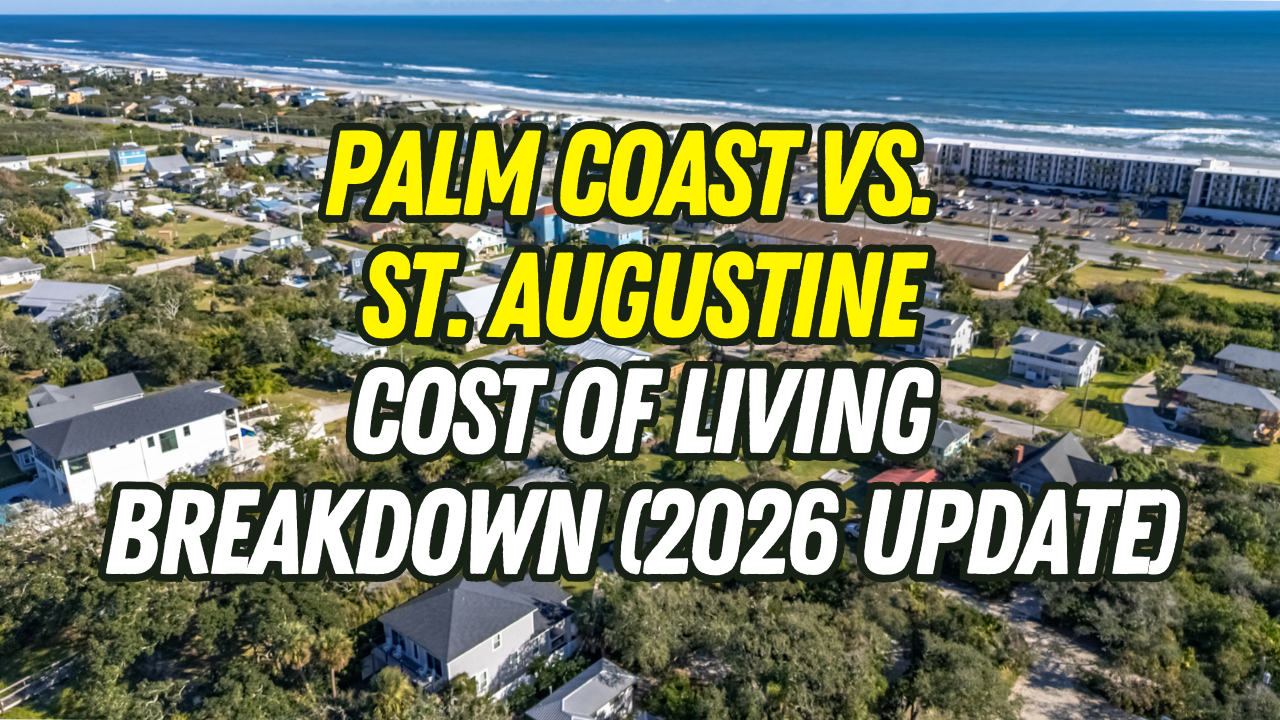
In 2026, Palm Coast generally offers a lower overall cost of living than St. Augustine, driven by more affordable housing, fewer tourism-related premiums, and lower day-to-day lifestyle expenses. St. Augustine, while more expensive, offers historic charm, stronger rental demand, and broader amenities that justify higher costs for some buyers and investors.
How Does the Cost of Living Compare Between Palm Coast and St. Augustine in 2026?
- Palm Coast typically has lower home prices and fewer premium-driven costs.
- St. Augustine carries higher housing and insurance costs, especially near historic and coastal zones.
- Property taxes vary by county, with St. Johns County often trending higher than Flagler County.
- Daily expenses like dining, parking, and entertainment are generally higher in St. Augustine.
- Investors may see stronger short-term rental demand in St. Augustine, offsetting higher costs.
Housing Costs: Purchase Prices, Rents, and Long-Term Ownership
Housing is the largest cost-of-living differentiator between Palm Coast and St. Augustine. Palm Coast is largely a planned residential community with newer housing stock, wider lots, and fewer historic restrictions. This typically translates into more predictable pricing and lower acquisition costs.
St. Augustine, particularly near the historic district, Anastasia Island, and coastal corridors, commands a premium. Limited inventory, preservation rules, and tourism demand all contribute to higher purchase prices and rents. Newer construction does exist on the outskirts, but pricing still reflects proximity to employment centers and attractions.
From an ownership standpoint, Palm Coast often appeals to relocating buyers seeking long-term affordability and consistency. St. Augustine appeals to buyers willing to pay more upfront for walkability, culture, and potential rental income.
"Kim is fantastic and we would recommend to anyone!! We moved from Oregon to Florida with no stress thanks to Kim! She is honest and truly care of what we wanted and needed. We couldn’t make this happen this easy without her!! Thank you for everything you have done for us!!!!" -Maki B.
Property Taxes, Insurance, and HOA Considerations
County-level costs matter. Palm Coast sits in Flagler County, while St. Augustine is in St. Johns County. Tax rates fluctuate annually, but St. Johns County often reflects higher assessed values, which can translate into higher property tax bills.
Insurance is another major factor in 2026. Coastal exposure, flood zones, and building age heavily influence premiums. St. Augustine properties closer to the coast or historic areas may face higher insurance costs due to age, elevation, and storm exposure. Palm Coast’s newer construction and inland neighborhoods often result in more manageable insurance profiles.
HOA presence is more common in Palm Coast’s planned communities, adding monthly dues but also covering amenities and maintenance. In St. Augustine, HOA costs vary widely depending on whether the property is in a historic district, condo association, or newer subdivision.
Daily Living Expenses and Lifestyle Costs
Everyday expenses subtly but meaningfully separate these two cities. Palm Coast tends to offer lower costs for groceries, dining, parking, and local services. The lifestyle is quieter and more residential, which naturally limits premium pricing.
St. Augustine’s tourism-driven economy introduces higher costs in dining, entertainment, and parking—especially in peak seasons. While residents can avoid tourist-heavy areas, the overall pricing environment reflects demand from visitors.
For relocating buyers, this often becomes a lifestyle decision: Palm Coast prioritizes affordability and space, while St. Augustine prioritizes access, culture, and activity.
"Kristen was an amazing realtor to work with. She helped my husband and I to find the perfect home for us in an area that we originally didn't know anything about. She was very easy to get in touch with and was excellent with communicating the process."-Kristin C
Investor Perspective: Cost vs. Revenue Potential
From an investment standpoint, higher costs do not automatically mean lower returns. St. Augustine’s stronger short-term and long-term rental demand can offset higher purchase prices and operating expenses, particularly in well-located properties.
Palm Coast tends to favor long-term rentals and buy-and-hold strategies, where lower acquisition costs and steadier expenses support consistent cash flow. Regulatory environments, insurance availability, and tenant demand should all be evaluated carefully before deciding between the two.
FAQ
Is Palm Coast cheaper than St. Augustine in 2026? Yes. For most residents, Palm Coast has a lower overall cost of living, especially in housing and daily expenses.
Why is St. Augustine more expensive?
Historic preservation, tourism demand, limited inventory, and coastal proximity all contribute to higher costs.
Which city is better for investors?
It depends on strategy. St. Augustine favors higher-revenue potential with higher costs, while Palm Coast favors stability and affordability.
Final Takeaway
Palm Coast and St. Augustine serve different priorities. Palm Coast wins on affordability and predictability. St. Augustine commands higher costs but delivers lifestyle, history, and income potential that many buyers and investors value.
Next Steps
If you'd like help navigating this topic, reach out to the Kim Devlin Team, your qualified real estate professionals or continue exploring helpful resources.
⬇️Get your FREE Relocation Guide here: ⬇️
St. Augustine Relocation Guide
Palm Coast Relocation Guide
Check out this article next